Starting with Puyi’s Appraisal of an Ancient Painting: Seeing Is Not Always Believing

Starting with Puyi’s Appraisal of an Ancient Painting: Seeing Is Not Always Believing

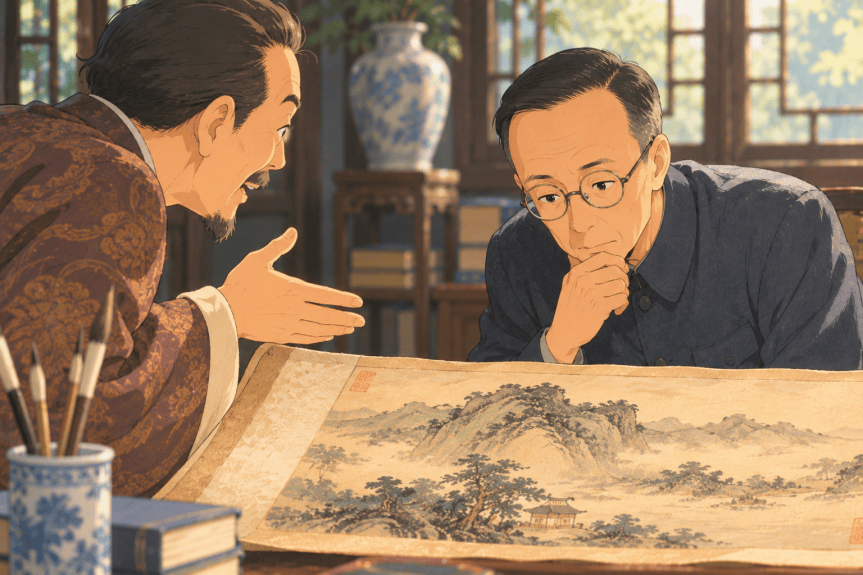
A couple of days ago, I came across an interesting video about a collector who showed one of his treasured possessions to Puyi, the last emperor of China. I would like to share this story with everyone.

One day, a collector invited Puyi to his home and presented an ancient painting that he had treasured for many years, asking Puyi to appraise it. The painting was believed to be the work of a renowned artist from the Ming Dynasty and had already been authenticated by two or three highly respected art experts. It was considered a national-treasure-level collectible.

At that time, Puyi had undergone labor reform and had long since shed the glory of his imperial status, becoming an ordinary citizen of Beijing. Unexpectedly, after examining the painting, he made a surprising remark: “There is something wrong with this painting!”

Upon hearing this, the collector’s expression immediately darkened. In the collecting world of that era, this man enjoyed a reputation comparable to that of Ma Weidu, a well-known Chinese antiques collector and cultural commentator today. If even someone of his standing had made such a serious mistake, how could he maintain his reputation in the collecting community? Therefore, Puyi was not merely questioning the authenticity of the painting; he was also challenging the collector’s professional knowledge and discerning eye. It was a direct blow to the collector’s pride!

The collector challenged Puyi, saying, “Tell me, what exactly is wrong with it? Look at the artist’s signature, the texture of the paper, the painting style, the ink, the colors—look at all these details…” He went on and on, using one technical term after another.

Puyi listened and nodded repeatedly. Then, in an unhurried manner, he replied, “Everything you have said is correct, but there is still something wrong with this painting.”

The collector pressed further, “Why do you say that?”

Puyi then gave an answer that left the collector speechless:

“Because it doesn’t look like the paintings I used to see in the imperial palace!”

Puyi did not attempt to refute the collector using specialized knowledge, nor did he cite any formal standards of authentication that he had learned in the palace. Instead, he relied on his firsthand experience. According to the story, he had never encountered counterfeit works while growing up because there were supposedly no fakes in the imperial palace! All the antiques and works of art he had seen since childhood were genuine masterpieces.

Thus, when he encountered a forgery, he might not have been able to explain, from an academic perspective, exactly which techniques had been used to create it. But he knew one thing: It was different from what he had seen in the imperial palace.

After seeing enough authentic masterpieces, one naturally develops an eye for recognizing counterfeits. This is similar to the Chinese saying, “After reading three hundred Tang poems, one can recite poetry even without knowing how to compose it.”

The collector, however, was confined by what he had learned and mistakenly identified a forgery as an authentic work based on his accumulated knowledge and experience. This illustrates that seeing is not always believing.

He had fallen into the trap of the obstacle of knowledge—clinging to his existing understanding and allowing it to prevent him from recognizing something beyond it. Like a frog at the bottom of a well that mistakes the small patch of sky above for the entire heavens, he had confined himself within the boundaries of his own experience, resulting in an embarrassing mistake.

Namo H.H. Dorje Chang Buddha III stated in Philosophical Sayings About Worldly Matters:

“What one has learned may dull one’s sensitivity to new knowledge and throw one into the darkness of ignorance. If such ignorance is not broken, one cannot hope to become intelligent, still less reach the realm of wisdom.”

This means that anyone who regards the knowledge they already possess as the only correct understanding or as absolute truth, refuses to absorb new knowledge, and treats new knowledge and insights as erroneous views has fallen into the obstacle of knowledge.

Such a person uses their existing knowledge as the standard by which everything else is judged, rejecting anything new that does not conform to what they already know and labeling it as false or heretical. This is precisely what it means to be obstructed by one’s own knowledge. In other words, the knowledge one possesses has itself become an obstacle to acquiring new knowledge.

Once a person develops this obstacle of knowledge, they will inevitably fall into a state of ignorance. One could even say that such a person has already become ignorant. They cannot truly become intelligent, much less attain wisdom.

This is because intelligence refers to understanding and knowledge within the worldly realm, whereas wisdom refers to a higher level of understanding associated with the state of non-action (wu wei).

Why, then, should a person avoid falling into the obstacle of knowledge?

Consider someone who is extraordinarily intelligent and begins reading books from the moment they are born. Suppose this person reads one book every day and lives to be one hundred years old. Even then, they would acquire the knowledge contained in only about 36,000 books throughout their lifetime.

But does all the knowledge in our world exist within those 36,000 books?

What if additional knowledge emerges beyond what is contained in those books? If you dismiss everything that does not agree with the knowledge you have acquired from those 36,000 books as false teachings or heresy, can you really claim to have grasped the truth?

In reality, the knowledge in this world is boundless and inexhaustible. To believe that one has understood the entire universe merely through the knowledge contained in 36,000 books is truly absurd and laughable.

Therefore, no one should fall into the obstacle of knowledge. We should never use the knowledge we already possess as a defensive weapon to resist new knowledge.

Instead, we should remain open to learning whatever new knowledge we encounter and ultimately subject it to the test of practice and experience. Only through such verification can we determine whether what we learned previously was the truth or whether we have only now encountered the truth.

Only by adopting this approach can a person become truly intelligent and eventually enter the realm of wisdom.

This is an immutable truth.

Link: https://myhappylifestyle.net/2026/11/01/dorjechangbuddhaiii-seeing-is-not-always-believing/

#DorjeChangBuddhaIII #Spirituality #Buddha #Buddhism

Once You Possess This Essential Soft Skill in Life, Never Let It Go

Once You Possess This Essential Soft Skill in Life, Never Let It Go

“If you do good, people will accuse you of selfish ulterior motives. But do good anyway.

The good you do today will be forgotten tomorrow. But do good anyway.

If you are successful, you will win false friends and true enemies. But succeed anyway.

What you spend years building may be destroyed overnight. But keep building anyway.

People with the greatest minds and the most generous hearts may be struck down by people with the smallest minds. But think big anyway.

People really need help, but they may attack you if you do help them. But help people anyway.

Give the world the best you have, and you may get kicked in the teeth. But give the world the best you have anyway.”

The above words are often attributed to Mother Teresa. They reflect a Catholic perspective on good deeds and benevolent intentions.

I once came across another thought-provoking passage:

“Just because you cannot bear to see others doing well does not mean they are doing poorly. But it certainly means that something is lacking within you, because your heart is devoid of goodness. When you sincerely wish others well, they may not necessarily prosper. But you are certainly a good person, because your heart is filled with kindness.”

I find these words particularly meaningful. The way you treat others often influences how they treat you in return. Therefore, when you strive to be a kindhearted person, you become more capable of recognizing and appreciating the kindness of others.

A person’s kindness is one of the most important soft skills for surviving, striving, and succeeding in society—and indeed, throughout life. Once you possess this invaluable quality, never let it go. Instead, hold on to it and persevere to the very end.

An ancient saying expresses this principle simply and clearly: “Those who give love receive love in return; those who bring blessings to others receive blessings in return.” In essence, goodness given will be returned with goodness, and kindness extended will be reciprocated with kindness.

Every act of kindness we extend to others may eventually return to us in another form, at a particular time and place. This is what we call gratitude and the repayment of kindness.

Sometimes, performing good deeds is like calling out into an empty valley. The echo may not return immediately. Instead, the sound travels farther, reaching other places and allowing more people to hear and carry it forward. By the time that kindness eventually finds its way back to you, it may have taken on a different form, but it will have gathered even more goodwill along the way.

Kind thoughts and good deeds are also like dandelion seeds. Carried by the wind, they scatter far and wide, take root, sprout, grow, and blossom, eventually spreading goodness across the land.

Namo H.H. Dorje Chang Buddha III, the Buddha residing in this world, also teaches us in Philosophical Sayings About Worldly Matters:

“What makes the sun the greatest thing man has ever known? It is admired for providing light and warmth for all the beings under it. A truly great person is one who is willing to sacrifice his own benefit for the well-being of others.”

Why is the nature of the sun considered so great? It is because the sun burns itself to bring light, warmth, and energy to the world. It enables plants to grow and allows humans and animals to survive. In other words, the sun provides the essential conditions that sustain life on Earth and bestows countless benefits upon all living things. That is why everyone praises its greatness.

The same principle applies to us as human beings. If we can act without selfishness or self-interest, dedicate ourselves quietly to serving others, and even be willing to make personal sacrifices for the benefit of the public, bringing happiness, welfare, and tangible benefits to others, then people will naturally respect us and praise our contributions. In doing so, we ourselves become truly great.

Therefore, we should always remember to treat others with kindness, sincerity, and a generous, forgiving heart.

As long as we maintain kind intentions, accumulate virtuous merit, and perform good deeds, we need not concern ourselves with whether others notice or acknowledge our efforts. We should simply continue doing good, without regret, resentment, or complaint.

Kindness is a choice. It is one of the gentlest yet most powerful qualities inherent in human nature, and one of the most important soft skills we can possess in life.

No matter how difficult the circumstances may be, we should remain steadfast in our kindness. For when a person practices goodness, even if blessings have not yet arrived, misfortune has already begun to move away.

Written by: On the Road

Edited by: Rainbow in the West

link: https://myhappylifestyle.net/2026/10/28/dorjechangbuddhaiii-once-you-possess-this-essential-soft-skill-in-life-never-let-it-go/

#DorjeChangBuddhaIII #Spirituality #Buddha #Buddhism

A Mother’s Forgiveness After Losing Her Only Child

A Mother’s Forgiveness After Losing Her Only Child

The ancients once said, “If we forgive others with the same understanding we extend to ourselves, we can preserve our relationships. If we judge ourselves as strictly as we judge others, we will make fewer mistakes.”

In other words, when we forgive others as readily as we forgive ourselves, our relationships will grow stronger. When we hold ourselves to the same standards we use to criticize others, we will make fewer mistakes.

The highest level of forgiveness is perhaps this: When someone hurts us, we neither hold a grudge nor seek revenge. Instead, we forgive that person, let go of our resentment, and even offer help when needed.

When a person, through the virtue of forgiveness, transforms enemies into friends and adverse circumstances into favorable ones, is that not a way of giving oneself the greatest gift? This embodies the ancient saying: “Great virtue comes from tolerance, and noble character comes from freedom from selfish desires.”

The following deeply moving and heartbreaking story inspired these reflections.

In Gaoming Village, Anhua County, Hunan Province, lived a widow named Luo Ying. Her son, Han Xiang, was attending university in Dalian when he tragically lost his life in a traffic accident. Upon hearing the devastating news, Luo Ying broke down in tears.

When her only son, Han Xiang, was in his third year of junior high school, her husband passed away from an illness. Before his death, he left her with just one request: “No matter how poor we are, we must make sure our son receives an education.”

For years, Luo Ying endured countless hardships and worked tirelessly to support her son’s education, eventually seeing him enter university. Her son was undoubtedly the greatest pride of her life. Yet just when life seemed to be getting better, another terrible tragedy struck.

Luo Ying hurried to Dalian to handle her son’s funeral arrangements. Before she left, the villagers who came to see her off urged her, “You must not let that terrible driver get away with this! He has completely destroyed your family!”

Upon arriving in Dalian, Luo Ying insisted on visiting the home of the driver responsible for the accident, a young man surnamed Fu, known as Xiao Fu. What she found was a family of five living in a small apartment of less than 50 square meters.

From the moment she entered until the moment she left, she did not say a single word about her son’s death. She simply shared a meal with the family and departed.

After she left, the Fu family found her behavior puzzling. They could not understand why she had neither cried nor expressed anger. The more they thought about it, the more unusual it seemed.

Luo Ying then visited her son’s university. She declined to meet with the legal team the university had arranged for her and made only one request: “Please help me arrange for Xiang’er’s body to be cremated as soon as possible.”

Later, carrying her son’s urn, she visited all the interesting and beautiful places in Dalian that her son had never had the chance to see.

Finally, Luo Ying met with the executives of the public transportation company that employed Xiao Fu. The executives were fully prepared for a difficult confrontation.

To everyone’s surprise, Luo Ying made only two requests.

First, she asked that Xiao Fu not be punished or dismissed from his job.

Second, knowing that Xiao Fu frequently suffered from insomnia, she offered him a traditional home remedy that she hoped might help.

Before she left, the company’s executives offered her a substantial sum of compensation. However, she firmly refused to accept it.

Her actions left everyone in the company, from the executives to the employees, deeply astonished.

Because Luo Ying chose not to pursue the matter further, Xiao Fu was able to keep his job.

From then on, Xiao Fu and representatives of the public transportation company visited their benefactor every year. They not only continued to care for Luo Ying as she grew older but also contributed to the development of her village in whatever ways they could—investing in local projects, building roads, and constructing new school buildings.

One can hope that, through these efforts, more children will have the opportunity to follow in Han Xiang’s footsteps: attending university, leaving their village, and discovering the wider world.

Luo Ying’s kindness, generosity, and forgiving nature are truly admirable. Despite the unbearable pain of losing her only son in a traffic accident, she demonstrated extraordinary patience, tolerance, and empathy.

Such moral character is far beyond what most people can achieve and is certainly worthy of our admiration and emulation.

As H.H. Dorje Chang Buddha III teaches in Philosophical Sayings About Worldly Matters:

“To forgive is evidence of one’s virtue. Right or wrong, success or failure will eventually become apparent to the public, and those who trespassed against you will be ashamed of themselves.”

This means that those who are able to understand and forgive the mistakes and disputes of others demonstrate that their moral character has reached an acceptable standard and entered the realm of virtuous conduct.

This is because disputes over right and wrong are often difficult to unravel or explain completely. Whether something ultimately results in success or failure will eventually become clear; it is simply a matter of time.

Moreover, disputes over right and wrong, as well as success and failure, are ultimately without inherent reality.

Once we understand this principle, we should not become attached to disputes over right and wrong. The more we cling to them, the more deeply we become entangled. The stronger our attachment, the further we sink into conflict and controversy.

By not becoming attached to such disputes, we demonstrate that our moral character has reached a higher level of virtue.

When others witness such conduct, they will come to recognize, deep within their hearts, that we are truly people of noble character and virtue.

In particular, those who have wronged us and drawn us into disputes may experience the reproach of their own conscience. Inspired by our conduct, they may reflect upon their mistakes, repent, reform themselves, and ultimately contribute to the well-being of society.

Throughout life’s journey, we encounter all kinds of people and situations, both good and bad, amid endless complexities and disturbances.

If we can respond to those who insult, criticize, or harm us with a broad mind and a compassionate heart—seeking to understand them and even showing them care—then what room would remain for anger, hatred, or resentment?

Surely, the world would become a better, more peaceful, and more harmonious place.

Written by: Zai Lu Shang

Edited by: Putizi

link: https://myhappylifestyle.net/2026/10/26/dorjechangbuddhaiii-a-mothers-forgiveness-after-losing-her-only-child/

#DorjeChangBuddhaIII #Spirituality #Buddha #Buddhism

Say No to Mental Exhaustion: There Is No Standard Answer to Life

Say No to Mental Exhaustion: There Is No Standard Answer to Life

In Aesop’s Fables, there is a humorous and thought-provoking story called The Father, the Son, and the Donkey.

A father and his son were leading a donkey to the market to sell it. Along the way, a group of young girls saw them and laughed at their foolishness, saying that they had a donkey but did not even know enough to ride it.

Thinking that they had a point, the father let his son ride the donkey while he walked alongside it.

Before long, an elderly man passed by and lamented the decline of moral values. He criticized the son for being unfilial, allowing his father to walk while he rode the donkey. Hearing this, the father and son switched places, with the father riding and the son walking.

After traveling a little farther, they encountered a woman who mocked the father for being heartless, riding comfortably while making his son walk. The father quickly invited his son to ride with him.

However, after continuing for some distance, another passerby criticized them, saying that two people riding such a thin donkey would surely exhaust it to death.

Upon hearing this, the father and son immediately dismounted. They found some rope, tied the donkey’s four legs together, and carried it on a pole.

As they were crossing a bridge, the donkey struggled violently, fell into the river, and drowned. The father and son could do nothing but embrace each other and weep bitterly.

After reading this story, most people would instinctively criticize the father and son: How could they be so foolish? Why did they immediately change their actions whenever someone made a comment? They had no firm convictions of their own!

Yet, upon deeper reflection, the story reveals a profound lesson: No matter what choices you make, you can never satisfy everyone.

From the young girls’ perspective, the donkey should have been put to good use, and riding it was better than walking alongside it. From the elderly man’s perspective, a son should respect and care for his father, so the father should have priority. From the woman’s perspective, a father should care for his child, so the son should have priority. From the passerby’s perspective, the donkey should be treated with compassion, so its well-being should come first.

Were any of them wrong? From their respective perspectives, their opinions were not necessarily right or wrong.

The crucial question is: What did the father and son actually want?

Returning to their original intention, all they wanted was to take the donkey to the market, sell it, and earn some money.

However, by repeatedly listening to others and trying to please everyone, they abandoned their independent judgment and their original convictions. In the end, they lost everything.

If we behave like the father and son in this fable, constantly seeking others’ approval and repeatedly questioning our own decisions, everything we pursue may ultimately prove to be nothing more than an illusion, like flowers reflected in a mirror or the moon reflected in water.

In reality, we do not need to please everyone. We can make our own choices because there is no single standard answer to life.

Life does not follow a fixed path, either. Each of us is given a different script. Our opportunities are unequal, our choices differ, and our outcomes are not necessarily the same.

Those who are “born in Rome”—children from wealthy families—may enjoy privileged access to resources, graduate from prestigious overseas universities, and return home to start businesses.

Children of celebrities may have exceptional advantages and opportunities, with easier access to the spotlight and public recognition.

Gil Perez, a longtime doorman at Christie’s auction house, worked for 35 years welcoming and assisting visitors, eventually retiring with benefits reportedly comparable to those of a vice president and an annual income reaching one million.

Meanwhile, students from small towns who have spent more than a decade studying diligently may overcome the limitations of their backgrounds through perseverance and hard work, eventually finding their place at the forefront of a changing world.

Although we all begin life from different starting points, with some getting an early start and others beginning later, our starting point does not determine our destination. The effort and perseverance we demonstrate along the journey remain deeply inspiring.

Life is full of examinations, and every experience presents a question to be answered. None of the paths we have traveled are meaningless; every step counts. Whether we find ourselves in a valley or at the summit, each offers its own scenery. Whether we encounter storms or sunshine, every experience can become a source of enrichment.

True redemption lies in personal growth and the refinement of one’s character. We need not glorify suffering, but the resilience and determination developed through adversity are certainly worthy of admiration.

As H.H. Dorje Chang Buddha III teaches in Philosophical Sayings About Worldly Matters:

“A tree exposed to the fury of the elements will grow tall and strong. A tree kept indoors will be too weak to survive any harsh environment even when its top touches the ceiling. A life of ease and comfort produces only weaklings.”

This means that trees worthy of becoming great structural pillars are those that have undergone extensive trials and refinement. Standing beneath heaven, the sun, and the moon, they endure the harshness of wind, cold, heat, and moisture as they grow.

In remote mountains and wilderness, these trees withstand countless hardships, storms, and years of exposure to the elements. Through such prolonged trials, they eventually grow into tall, strong, and sturdy trees.

However, if a tree is planted indoors, no matter how much it grows—even if it reaches the roof—it remains tender and underdeveloped. Without sufficient sunlight, rain, and exposure to the natural elements, it lacks the necessary conditions for proper growth and strengthening. As a result, its wood remains soft and immature, unsuitable for practical use.

The same principle applies to human beings.

If a person merely studies behind closed doors, never experiences hardship, never undergoes various forms of training, and remains completely disconnected from society and practical life, that person will never truly understand the full range of life’s experiences—the bitterness, sourness, spiciness, sweetness, and saltiness of life.

Without such experiences, one cannot become a strong and capable individual. And without developing such strength and capability, one cannot become a truly outstanding and useful person.

Therefore, to become a person of genuine ability, one must undergo the kinds of trials described by the ancients: having one’s muscles and bones tested through hard work, experiencing hunger and physical hardship, enduring poverty and deprivation, and facing difficulties that challenge one’s actions and resolve.

None of these forms of training can simply be overlooked if one wishes to develop genuine ability. Only through diverse experiences, practical training, and personal refinement can a person ultimately become someone of true value and capability.

Written by: Yue Se

link: https://myhappylifestyle.net/2026/10/24/dorjechangbuddhaiii-say-no-to-mental-exhaustion-there-is-no-standard-answer-to-life/

#DorjeChangBuddhaIII #Spirituality #Buddha #Buddhism

The More Accomplished a Person Is, the More They Embrace “Deep-Well Thinking”

The More Accomplished a Person Is, the More They Embrace “Deep-Well Thinking”

Many people have heard of the “10,000-Hour Rule,” which suggests that to become an expert in a particular field, a person needs at least 10,000 hours of practice. In other words, if you work eight hours a day, five days a week, it will take at least five years to become an expert in a particular field. If you devote three hours a day to effective learning, accumulating more than 1,000 hours a year, you may become a highly skilled professional in that field after ten years.

Success does not come from grand declarations but from persistent, down-to-earth effort and unwavering perseverance. An indispensable part of this process is the self-discipline practiced day after day.

The renowned French thinker and writer Romain Rolland once said, “Rather than spending a great deal of time and energy digging many shallow wells, it is better to devote the same time and energy to digging one deep well.”

Learning to settle one’s mind, remain focused, and cultivate deep expertise in one’s chosen field is among the rarest and most valuable abilities a person can possess.

What Romain Rolland described is essentially “deep-well thinking.” Imagine digging a well in search of water. If you give up and move to another location every time you fail to find water, you may end up digging many shallow wells without ever reaching a water source. Would it not be better to concentrate your efforts on digging one well, persevering until you finally reach water?

After all, everyone’s time and energy are limited. If you want to achieve success in a particular area, you must commit yourself to that field, cultivate your expertise, and strive to become an expert. You should not constantly imagine that the grass is greener elsewhere, nor should you be halfhearted in your efforts or give up easily. Only by thoroughly understanding the essence of what we do can we develop genuine confidence, accumulate substantial knowledge and ability, and eventually achieve remarkable results.

Yet many people today are too restless and impatient. Whatever they attempt, they hesitate, worry excessively about what lies ahead, and constantly doubt themselves. They are unwilling to put in the necessary effort, and as a result, many things remain unfinished or unsuccessful. They confine themselves to a narrow world of their own making, accomplish little, and ultimately complain about the unfairness of society rather than reflecting upon their own shortcomings.

There is no such thing as a free lunch, nor is there any success that comes without effort. Every meaningful achievement must be earned through one’s own hard work and perseverance.

Zeng Guofan, a prominent figure of the late Qing Dynasty, taught his children that three qualities are essential to learning: first, aspiration; second, knowledge and insight; and third, perseverance.

We can apply this principle to our daily lives as well. Once we have established a clear goal, we should act with determination, remain firm in our convictions, and persevere in our efforts. We will then discover that accomplishing something well is not necessarily as difficult as we once imagined.

Namo H.H. Dorje Chang Buddha III imparted in Philosophical Sayings About Worldly Matters:

“No pains, no gains. Hard work never goes unrewarded for it always leads to gains. Pain is gain in disguise.”

This means that all happiness and blessings are obtained through diligent and arduous effort; they do not simply fall from the sky.

To accomplish anything worthwhile, we must strive for it with diligence. Such effort naturally involves fatigue and hardship, and we may even encounter setbacks, difficulties, and suffering along the way. However, as long as we do not retreat, but continue moving forward, overcoming obstacles and striving toward our goals, the hardship we endure will ultimately give rise to the happiness of accomplishment.

This is why the ancients said that blessings arise from hardship. After enduring difficulties, blessings naturally follow.

The phrase “This is perfectly clear” emphasizes that the law of cause and effect is never mistaken. Happiness must be earned through one’s own diligent labor and perseverance. There are absolutely no shortcuts. This is a truth that is perfectly clear and unmistakable.

Indeed, this is precisely what we observe in real life. The famous and accomplished people we see and hear about have all devoted tremendous effort and hard work behind the scenes before achieving success.

Take the American swimmer Michael Phelps, for example. In addition to his natural physical advantages, including his exceptionally long arms and legs, he reportedly trained for eight hours a day throughout the year, maintaining this demanding routine for five or six years. Through such extraordinary dedication, he achieved the remarkable feat of winning eight gold medals at the Beijing Olympic Games.

Similarly, Warren Buffett, widely known as the “Oracle of Omaha,” and Microsoft co-founder Bill Gates have devoted countless hours—far exceeding 10,000—to thinking, researching, and putting their knowledge into practice within their respective fields. Combined with their keen market insight and business judgment, these sustained efforts contributed to their extraordinary achievements.

When we understand the saying, “Ten years of sharpening a sword for the moment its brilliance is revealed,” we also come to appreciate the power of concentration, diligent learning, and continuous self-improvement.

As the ancient saying goes:

“Without accumulating small steps, one cannot travel a thousand miles; without gathering small streams, rivers and seas cannot be formed.”

Whatever we aspire to accomplish, as long as we follow the right path and pursue our goals with unwavering determination and persistent effort, we can trust that our time and dedication will not be wasted, and that our achievements will eventually come to fruition.

Written by: Zai Lu Shang
Edited by: Yuese

Link: https://myhappylifestyle.net/2026/10/20/dorjechangbuddhaiii-deep-well-thinking/

#DorjeChangBuddhaIII #Spirituality #Buddha #Buddhism
Did My Child’s Gaming Spark a “Family War”? The Experience That Reshaped My Approach to Parenting

Did My Child’s Gaming Spark a “Family War”? The Experience That Reshaped My Approach to Parenting

From time to time, we come across news stories online about mothers who become so stressed while helping their children with homework that they develop health problems, fathers who become so angry while tutoring their children that they suffer heart attacks, and parents whose efforts to supervise homework end up triggering a full-blown “family battle.”

Without exaggeration, I recently experienced a “family war” of my own. It truly brought to mind the saying: “When there’s no homework, mother and child are loving and harmonious; once homework begins, the whole household is thrown into chaos!”

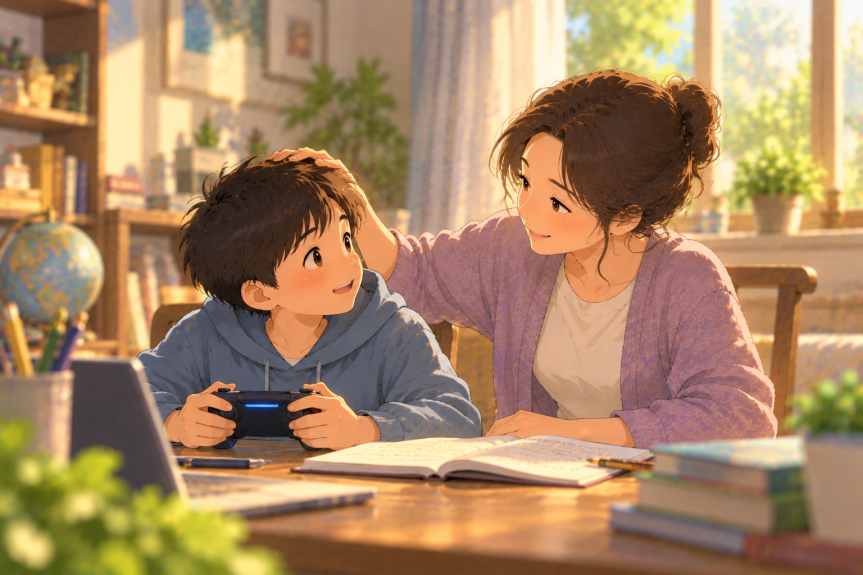
Due to local COVID-19 prevention measures, the school notified students that classes would be conducted online from home. On the first day, my son followed his teacher’s instructions very well. By the second day, however, he had begun doing as he pleased. Before finishing his homework, he started playing video games and did not submit his assignment until 10 p.m.

When I saw the teacher’s message reminding him to turn in his homework, my anger immediately flared up. I raised my voice and scolded my son, “Why can’t you be more responsible? Do you know how much I trust you? Is this how you’re going to deal with your homework?!”

He immediately raised his voice in return and protested, “Why do you have to control everything? As long as I finish my homework that day, it should be fine!”

How dare he yell at me like that? It seemed utterly disrespectful! I was deeply hurt and extremely angry. In a moment of impulse, I slapped him and took away his phone. My son cried and made a scene, throwing the whole household into turmoil. When I tried to speak with him again, he slammed the door, locked it, and refused to let me come near him.

For a moment, I did not know what to do. Almost without realizing it, I went to the Buddhist altar, opened a Buddhist book, and began reading respectfully. I came across this teaching by Namo H.H. Dorje Chang Buddha III:

“When someone criticizes or slanders you, there must be some mistakes you have made in handling things inappropriately, or at least you have failed to win people’s approval and respect for what you did. What you must do in this case is to make full criticism of yourself.”

This means that whenever someone criticizes or slanders you, you should carefully reflect upon yourself and recognize that there must be something you have done wrong, because people do not accuse others entirely without cause.

In our interactions with others or when handling various matters, conflicts may inevitably arise for many different reasons. Perhaps something in our words or actions has offended or wronged the other person, or perhaps our attitude has made them feel that they have been treated unfairly. At the very least, we have failed to gain their recognition, respect, or admiration. In other words, we have failed to earn their goodwill toward us.

This alone shows that we are not yet perfect and that there are shortcomings on our part. Therefore, we should sincerely examine ourselves from within, recognize our own faults, and engage in more self-criticism and self-reflection.

The more I read, the more ashamed I felt, and gradually my mind became calm again. It was certainly wrong for my son to become absorbed in video games to the point that they interfered with his studies, but my own mistake was even greater. I should not have lost my temper, much less hit him. Violence cannot solve problems. I should treat my son as an equal and communicate with him more. Resorting to physical force would only intensify the conflict and make him even more rebellious.

How could my words and actions that day reflect those of a loving mother? How could they reflect the conduct of someone cultivating herself?

As I thought about this, I became deeply remorseful. At that moment, my entire approach to parenting was reshaped. I realized that I should not use parental authority to suppress my son. Instead, I needed to communicate with him on an equal footing.

Afterward, I changed my attitude and spoke with my son calmly. I took the initiative to apologize to him, acknowledged my mistake, and promised that I would no longer resort to violence. When problems arose, we would communicate with each other instead.

At the same time, we reached an agreement: he could use his phone, but only after completing his homework and provided that he had enough free time. He could play games for no more than half an hour a day. My son accepted these conditions.

At last, the conflict was resolved. Our “family war” came to an end, and we made peace with each other.

My son’s “rebelliousness” taught me a valuable lesson. It prompted me to reflect on myself and correct my attitude. It also led me to think more deeply: Life is filled with ups and downs, favorable and adverse circumstances. Greed, anger, ignorance, attachment, joy, sorrow, and all kinds of emotions accompany us along the way. What should we do so that we can withstand the tests and trials of life?

Look Inward Rather Than Seeking Outward

In the past, whenever conflicts arose between me and my family members, colleagues, or classmates, I habitually blamed others. I failed to recognize my own faults and always believed that I was right.

Yet when one finger points at another person, the other fingers point back at oneself.

Looking back, I realized how often I had complained. I had complained that my parents favored my brother and did not care enough about me. I had complained that my husband made reckless decisions and accumulated debts, leaving me constantly worried and anxious. I had complained that my son was playful and disobedient. I had complained that my family failed to appreciate everything I did for them.

But complaining, blaming, and becoming angry only make matters worse; they do not solve the actual problem. Ultimately, the better approach is to examine matters from the perspective of cause and effect, analyze the situation, uncover the root of the problem, and find a way to resolve it.

Strengthen Our Vows and Resolve to Fulfill Them

Afflictive hindrances are among the great obstacles we face. They arise from karmic forces rooted in beginningless ignorance. When the power of our vows arises, it can overcome the force of karma.

If we do not have the great vow and determination to attain liberation in this lifetime, do we really want to continue wandering through the six realms of reincarnation in our next life? We may never again encounter the wonderful Dharma conditions that we have in this lifetime.

Since we have already had the opportunity in this lifetime to hear the True Dharma and learn and practice Buddhism, we should follow the teachings and put them into practice, relinquish our attachments, and no longer allow ourselves to be swept away by the Eight Winds—gain and loss, defamation and praise, acclaim and ridicule, suffering and pleasure.

We must cultivate ourselves amid the circumstances we encounter, sincerely and steadfastly fulfill our vows, and resolve to bring them to completion. This serves as a compass guiding us forward.

The Family Is Our Training Ground

The path of cultivation is like a difficult journey, and I too am a traveler upon it.

Cultivation is reflected in every thought that arises in our minds, every movement we make, every word we speak, and every way in which we interact with people and handle matters. It is reflected in whether we have truly learned from the Buddha’s thoughts, speech, and conduct and whether we actually put what we have learned into practice in our daily lives.

The family is our training ground.

A happy family does not come from constantly thinking about how to change the other person. Rather, it comes from continually examining our own shortcomings, correcting them, improving ourselves, and becoming better people—while also bringing comfort and happiness to those around us.

I believe that a heart filled with gratitude and appreciation for the affinities we share will bring greater joy, ease, and peace to both ourselves and our families.

Written by: Haohe
Edited by: Sayi / Bodhizi

Link: https://myhappylifestyle.net/2026/10/14/dorjechangbuddhaiii-did-my-childs-gaming-spark-a-family-war/

#DorjeChangBuddhaIII #Spirituality #Buddha #Buddhism
Only by Being Content and Cherishing Our Blessings Can We Find Happiness

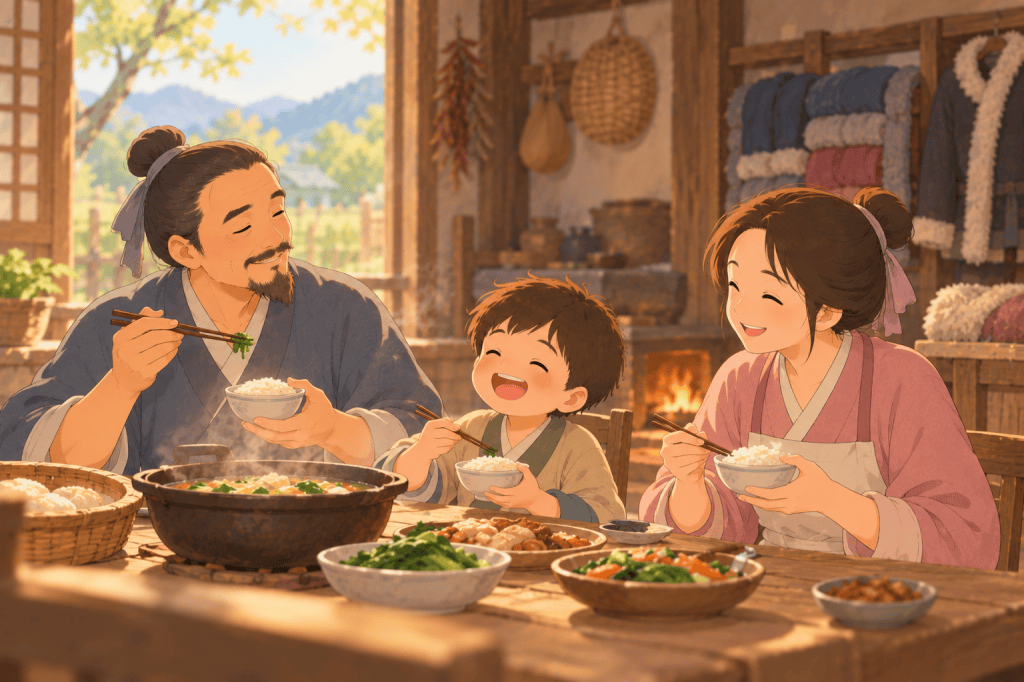
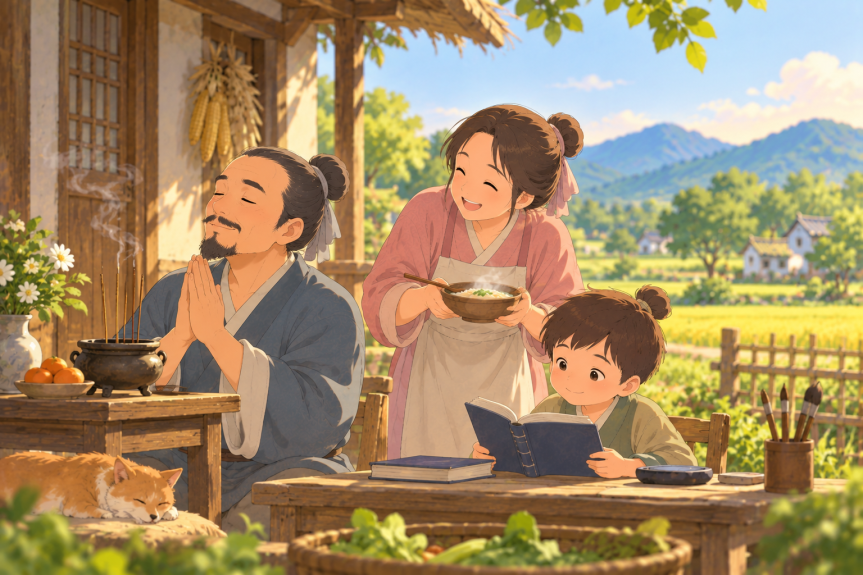
During the Ming Dynasty, there was a man named Hu Jiushao. He farmed while teaching his son to read and study, and the family had enough to meet their basic needs. Yet every day, he would burn incense and offer prayers, thanking Heaven for blessing him with another day of peace and contentment.

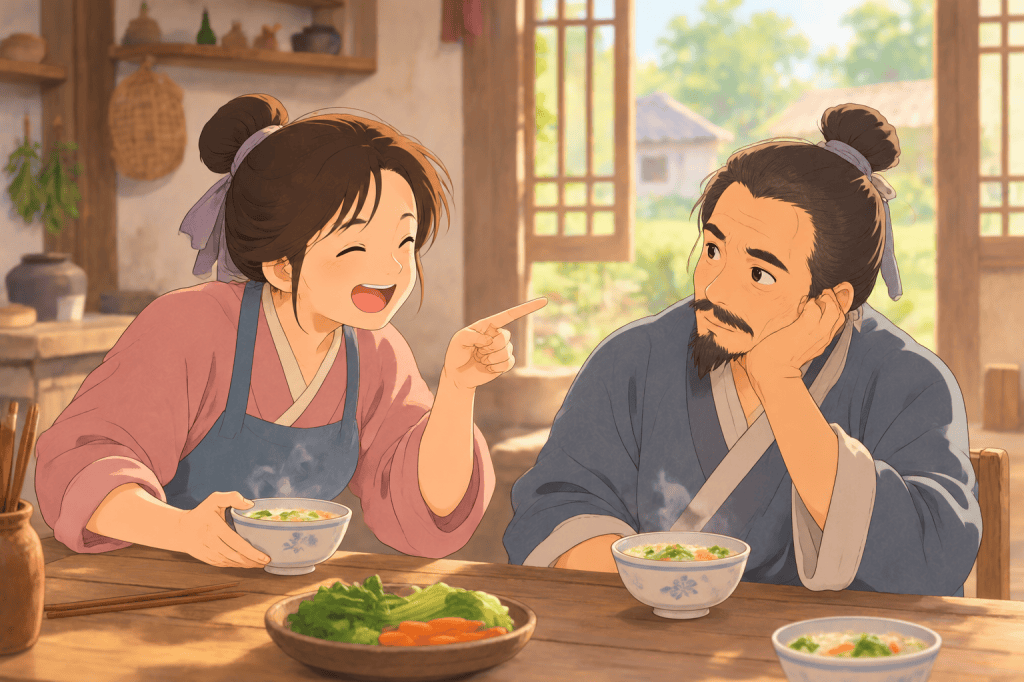
His wife laughed at him and said, “We eat vegetable porridge for all three meals. How can you call this a blessed life?”

He replied:

“First, we live in a time of peace and do not have to endure the suffering of war.

Second, our family has food to eat and clothes to wear, so we neither go hungry nor suffer from the cold.

Third, everyone in our family is healthy, and none of us has suffered the misfortune of imprisonment. Aren’t these blessings?”

In fact, people often fail to experience a sense of happiness because they have too many desires and do not know how to be content. As Namo H.H. Dorje Chang Buddha III taught:
“A person not appreciative of the good life he is living is one who has forgotten his past miseries. A person in good health is not aware of its blessings until he loses it.”


This means that some people are blessed without realizing how fortunate they are. Even though things are going well for them in many respects, they still feel that this is unsatisfactory and that is not as they wish. They are full of complaints and feel unhappy with their circumstances. This is mainly because, while living in happiness, they have forgotten the hardships of adversity.


When enjoying happiness, they forget the difficulties they once experienced. It is just like people who are strong and healthy often failing to appreciate how painful it is to become ill. They may neglect their health and fail to cherish their strong and healthy bodies. Once they fall ill, however, they may find themselves confined to bed, unable to move about and without even the desire to eat. Only then do they realize the joy and blessing of good health.


The story above reminds us that many of life’s blessings can be found in the ordinary things we have grown accustomed to. Peace, having enough food and clothing, and good health may seem ordinary, but once they are lost, we come to realize just how precious they truly are. Therefore, we should learn to be content, cherish our blessings, and appreciate everything we have in the present.

Only by being content and knowing how to cherish what we have can we experience an enduring sense of happiness and joy.


Written by: Yazhu

Edited by: Bodhi Seed

Link: https://myhappylifestyle.net/2026/09/30/dorjechangbuddhaiii-only-by-being-content-and-cherishing-our-blessings-can-we-find-happiness/

#DorjeChangBuddhaIII #Spirituality #Buddha #Buddhism
When We Put “Me” at the Center, We Inevitably Find Things Hard to Accept, Hard to Hear, and Hard to Understand

When We Put “Me” at the Center, We Inevitably Find Things Hard to Accept, Hard to Hear, and Hard to Understand

A close friend once complained to me about her child.

“My child is driving me crazy! He’s only four or five years old, yet he can already turn the whole household upside down!”

I asked, “What happened?”

She said, “He refuses to eat properly. After mealtime is over, he goes looking for cold leftovers. He wants to play until midnight, and if we refuse to play with him, he hits us—and he hits hard. Lately, he has been coughing constantly and has eczema all over his body. He has practically become a regular at the hospital…”

His eating habits were irregular, his sleep schedule was irregular, and he loved eating cold foods. With habits like these affecting his digestive health, how could he not get sick?

I then asked, “Do you often hit him? Is that why he has learned to hit others?”

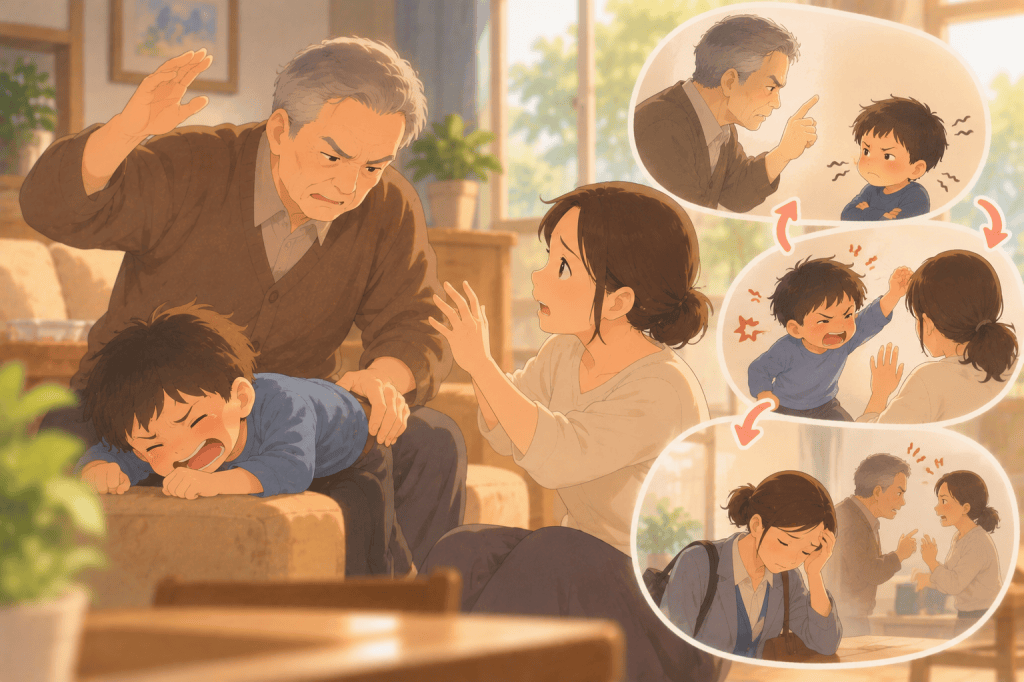
“Ah,” she sighed. “My father believes in strict discipline and corporal punishment. Whenever the child misbehaves, Grandpa gives him a good spanking. I’ve tried talking to my father and asking him not to hit the child so much, but he won’t listen. As a result, the more the child is hit, the more unruly he becomes, and the more unruly he becomes, the more he gets hit. By the time I come home from work, I’m completely exhausted by all of this. Now even my father and I get upset with each other over the smallest things. We find each other’s behavior hard to accept, each other’s words hard to hear, and each other’s thinking impossible to understand…”

I couldn’t help but sympathize with my friend. Her child had not even reached the stage when she would have to help him with schoolwork, yet the household was already in complete chaos.

As the saying goes, “It takes ten years to grow a tree, but a hundred years to nurture a person.” Raising and educating a child is truly no easy task. When family members disagree about how a child should be raised, conflict is almost inevitable.

For many years, educators have advocated encouragement and positive reinforcement rather than corporal punishment. We cannot truly win people over through force; we need to reason with them and reach them through understanding and compassion. Two generations have different life experiences, levels of education, personalities, and understandings of life. Naturally, their approaches to raising a child can be very different. One wants strict and forceful discipline, while the other favors a gentle and patient approach. In the end, neither approach is carried out effectively, and the two sides only grow increasingly frustrated with each other.

But do situations in which people find one another “hard to accept, hard to listen to, and hard to understand” exist only between fathers and daughters? Of course not. Conflicts arise between husbands and wives, relatives and friends, coworkers, classmates, people from the same hometown, and even complete strangers.

Two of my coworkers once had a disagreement over a work assignment.

Coworkers A and B were responsible for producing the company magazine. A handled planning, editing, proofreading, and communication with the printing company, while B was responsible only for layout and typesetting. Because they were rushing to meet the deadline, A reviewed three rounds of proofs, checked the sample copy, and then authorized printing.

The following day, A looked through the sample again and discovered that the month printed on the cover was incorrect. During proofreading, A had already asked B to correct it. However, B had carelessly failed to properly save the final revised file, so the error remained. At the same time, A had also failed to notice the mistake when reviewing the sample copy.

When they contacted the printing company again, they learned that the company magazine was already being printed. Reprinting the cover would require additional expense. And so, a loss that should never have occurred was incurred.

A blamed B: “Why didn’t you properly save the file after making the correction? Why didn’t you take responsibility for your work?”

B, in turn, blamed A: “Why didn’t you carefully check the sample?”

Each found fault with the other. Neither wanted to hear what the other had to say, and neither could understand how the other could have been so careless.

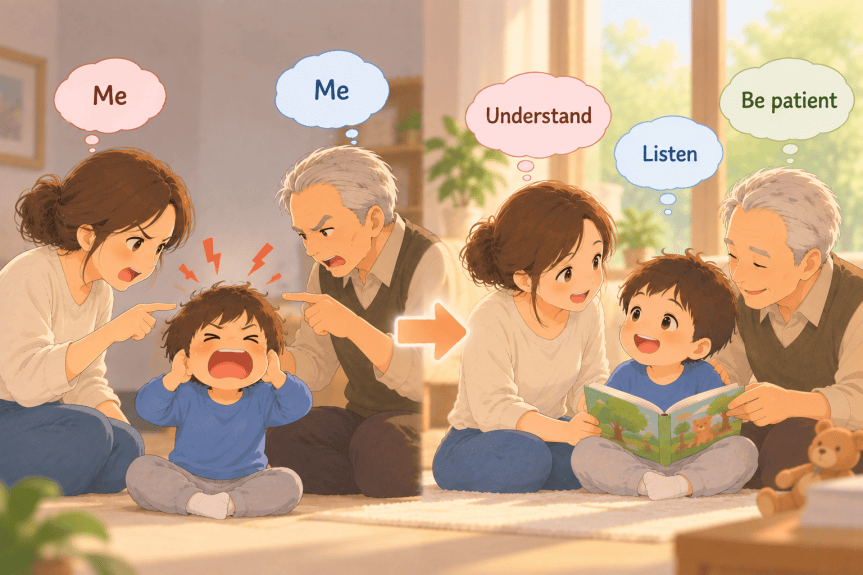
In fact, both of these real-life situations—the disagreement between father and daughter over how to raise the child and the conflict between coworkers caused by a lack of carefulness—stemmed from putting “me” at the center.

The grandfather thought, “If my grandson doesn’t behave, he needs to be disciplined physically. After all, this is how I raised several children.”

The mother thought, “When my son misbehaves, adults should reason with him. We shouldn’t substitute punishment for proper guidance. We should teach him gently and patiently.”

And what about the two coworkers?

One thought, “I already checked everything thoroughly.”

The other thought, “You were the one who failed to check carefully.”

Because they failed to cooperate effectively, mistakes naturally occurred.

Yet the father and daughter actually shared the same goal: to raise the child well.

And the two coworkers also shared the same goal: to produce the magazine well.

The attitude of “I don’t care what you think; what matters is what I think” places the self above everything else.

If people want to live together harmoniously, they need to learn to put themselves in one another’s shoes. If the grandfather listened to his daughter’s suggestion to use gentleness rather than force, and if the daughter communicated more patiently with her elderly father about ways of educating the child, wouldn’t their relationship become more harmonious?

Likewise, if the two coworkers showed greater understanding toward each other’s responsibilities, reminded one another when necessary, and complemented each other’s work, wouldn’t they be able to accomplish the task successfully? What would there be to argue about?

As Namo H.H. Dorje Chang Buddha III said:

“A protracted dispute is wrong on both sides. Why? Entangled in such a dispute, both sides see only the faults of the opposing party and the merits of his own. Continuing dispute will but increase the wrongdoing. When one realizes that the other party is as annoyed as he is, one is apt to withdraw from the dispute.”

By letting go of attachment to the self and our own views, and by learning to be tolerant and understanding of one another, we become able to listen to other people’s opinions and recognize their strengths. In this way, we can gradually move from stubbornly clinging to our own views toward accepting and appreciating others.

Always remember: “I” am not the measure of the world.

If we always put “me” first in everything, we are simply creating trouble for ourselves. Instead, we should think: I am a Buddhist practitioner who still has much to be ashamed of. I still have many shortcomings and faults. I should learn more from the strengths of others and spend less time looking for their faults.

As the saying goes:

“The sea is vast because it embraces hundreds of rivers; a person is great because of the capacity to be tolerant.”

When we broaden our hearts and minds, expand our perspective, and elevate our moral character, our work and our lives can proceed more smoothly. We can gradually move away from selfish attachment to the self and toward benefiting both ourselves and others.

Isn’t letting go of the constant focus on “me” itself part of cultivation?

Written by: He Suoyou

Link: https://myhappylifestyle.net/2026/09/28/dorjechangbuddhaiii-when-we-put-me-at-the-center/

#DorjeChangBuddhaIII #Spirituality #Buddha #Buddhism