Did My Child’s Gaming Spark a “Family War”? The Experience That Reshaped My Approach to Parenting

Did My Child’s Gaming Spark a “Family War”? The Experience That Reshaped My Approach to Parenting

From time to time, we come across news stories online about mothers who become so stressed while helping their children with homework that they develop health problems, fathers who become so angry while tutoring their children that they suffer heart attacks, and parents whose efforts to supervise homework end up triggering a full-blown “family battle.”

Without exaggeration, I recently experienced a “family war” of my own. It truly brought to mind the saying: “When there’s no homework, mother and child are loving and harmonious; once homework begins, the whole household is thrown into chaos!”

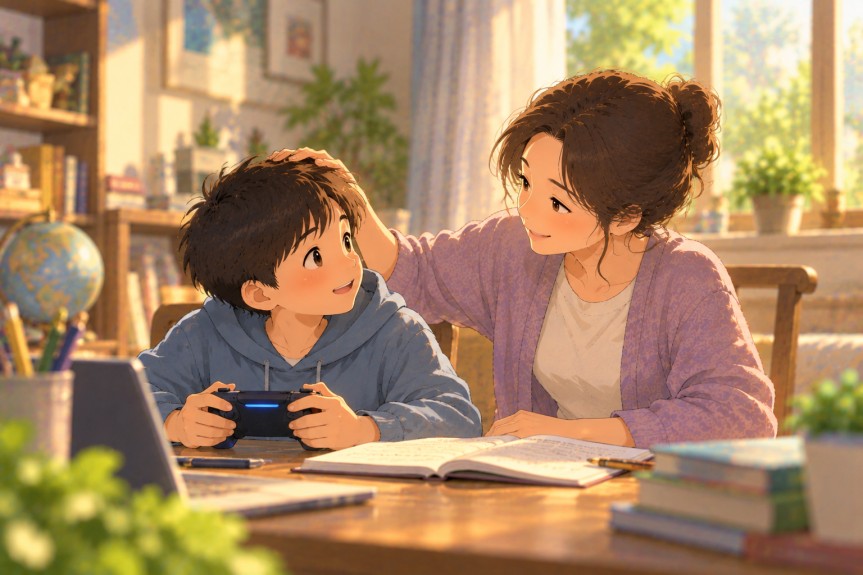
Due to local COVID-19 prevention measures, the school notified students that classes would be conducted online from home. On the first day, my son followed his teacher’s instructions very well. By the second day, however, he had begun doing as he pleased. Before finishing his homework, he started playing video games and did not submit his assignment until 10 p.m.

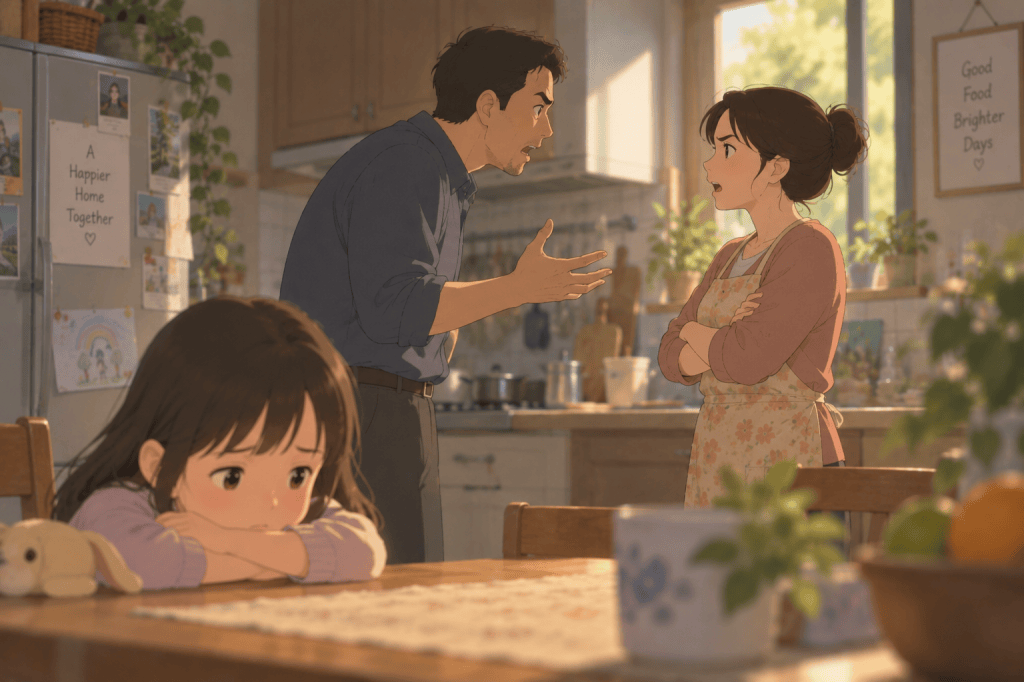
When I saw the teacher’s message reminding him to turn in his homework, my anger immediately flared up. I raised my voice and scolded my son, “Why can’t you be more responsible? Do you know how much I trust you? Is this how you’re going to deal with your homework?!”

He immediately raised his voice in return and protested, “Why do you have to control everything? As long as I finish my homework that day, it should be fine!”

How dare he yell at me like that? It seemed utterly disrespectful! I was deeply hurt and extremely angry. In a moment of impulse, I slapped him and took away his phone. My son cried and made a scene, throwing the whole household into turmoil. When I tried to speak with him again, he slammed the door, locked it, and refused to let me come near him.

For a moment, I did not know what to do. Almost without realizing it, I went to the Buddhist altar, opened a Buddhist book, and began reading respectfully. I came across this teaching by Namo H.H. Dorje Chang Buddha III:

“When someone criticizes or slanders you, there must be some mistakes you have made in handling things inappropriately, or at least you have failed to win people’s approval and respect for what you did. What you must do in this case is to make full criticism of yourself.”

This means that whenever someone criticizes or slanders you, you should carefully reflect upon yourself and recognize that there must be something you have done wrong, because people do not accuse others entirely without cause.

In our interactions with others or when handling various matters, conflicts may inevitably arise for many different reasons. Perhaps something in our words or actions has offended or wronged the other person, or perhaps our attitude has made them feel that they have been treated unfairly. At the very least, we have failed to gain their recognition, respect, or admiration. In other words, we have failed to earn their goodwill toward us.

This alone shows that we are not yet perfect and that there are shortcomings on our part. Therefore, we should sincerely examine ourselves from within, recognize our own faults, and engage in more self-criticism and self-reflection.

The more I read, the more ashamed I felt, and gradually my mind became calm again. It was certainly wrong for my son to become absorbed in video games to the point that they interfered with his studies, but my own mistake was even greater. I should not have lost my temper, much less hit him. Violence cannot solve problems. I should treat my son as an equal and communicate with him more. Resorting to physical force would only intensify the conflict and make him even more rebellious.

How could my words and actions that day reflect those of a loving mother? How could they reflect the conduct of someone cultivating herself?

As I thought about this, I became deeply remorseful. At that moment, my entire approach to parenting was reshaped. I realized that I should not use parental authority to suppress my son. Instead, I needed to communicate with him on an equal footing.

Afterward, I changed my attitude and spoke with my son calmly. I took the initiative to apologize to him, acknowledged my mistake, and promised that I would no longer resort to violence. When problems arose, we would communicate with each other instead.

At the same time, we reached an agreement: he could use his phone, but only after completing his homework and provided that he had enough free time. He could play games for no more than half an hour a day. My son accepted these conditions.

At last, the conflict was resolved. Our “family war” came to an end, and we made peace with each other.

My son’s “rebelliousness” taught me a valuable lesson. It prompted me to reflect on myself and correct my attitude. It also led me to think more deeply: Life is filled with ups and downs, favorable and adverse circumstances. Greed, anger, ignorance, attachment, joy, sorrow, and all kinds of emotions accompany us along the way. What should we do so that we can withstand the tests and trials of life?

Look Inward Rather Than Seeking Outward

In the past, whenever conflicts arose between me and my family members, colleagues, or classmates, I habitually blamed others. I failed to recognize my own faults and always believed that I was right.

Yet when one finger points at another person, the other fingers point back at oneself.

Looking back, I realized how often I had complained. I had complained that my parents favored my brother and did not care enough about me. I had complained that my husband made reckless decisions and accumulated debts, leaving me constantly worried and anxious. I had complained that my son was playful and disobedient. I had complained that my family failed to appreciate everything I did for them.

But complaining, blaming, and becoming angry only make matters worse; they do not solve the actual problem. Ultimately, the better approach is to examine matters from the perspective of cause and effect, analyze the situation, uncover the root of the problem, and find a way to resolve it.

Strengthen Our Vows and Resolve to Fulfill Them

Afflictive hindrances are among the great obstacles we face. They arise from karmic forces rooted in beginningless ignorance. When the power of our vows arises, it can overcome the force of karma.

If we do not have the great vow and determination to attain liberation in this lifetime, do we really want to continue wandering through the six realms of reincarnation in our next life? We may never again encounter the wonderful Dharma conditions that we have in this lifetime.

Since we have already had the opportunity in this lifetime to hear the True Dharma and learn and practice Buddhism, we should follow the teachings and put them into practice, relinquish our attachments, and no longer allow ourselves to be swept away by the Eight Winds—gain and loss, defamation and praise, acclaim and ridicule, suffering and pleasure.

We must cultivate ourselves amid the circumstances we encounter, sincerely and steadfastly fulfill our vows, and resolve to bring them to completion. This serves as a compass guiding us forward.

The Family Is Our Training Ground

The path of cultivation is like a difficult journey, and I too am a traveler upon it.

Cultivation is reflected in every thought that arises in our minds, every movement we make, every word we speak, and every way in which we interact with people and handle matters. It is reflected in whether we have truly learned from the Buddha’s thoughts, speech, and conduct and whether we actually put what we have learned into practice in our daily lives.

The family is our training ground.

A happy family does not come from constantly thinking about how to change the other person. Rather, it comes from continually examining our own shortcomings, correcting them, improving ourselves, and becoming better people—while also bringing comfort and happiness to those around us.

I believe that a heart filled with gratitude and appreciation for the affinities we share will bring greater joy, ease, and peace to both ourselves and our families.

Written by: Haohe
Edited by: Sayi / Bodhizi

Link: https://myhappylifestyle.net/2026/10/14/dorjechangbuddhaiii-did-my-childs-gaming-spark-a-family-war/

#DorjeChangBuddhaIII #Spirituality #Buddha #Buddhism
COVID-19 Became the Final Blow That Took My Father Away

COVID-19 struck with devastating force and became the final blow to my father, who was
already suffering from lung cancer. That winter felt especially bleak and desolate. Snow
was falling, yet even the snowflakes did not feel as cold as my heart.

My father was the person I respected most in my life. He was the “backbone” of our family.
Born in a rural village in northeastern China, my father was not only the pride of my
grandparents but also the pride of the entire village. In those difficult times, for a boy from a
poor rural family to be admitted to a prestigious university was almost like becoming the
top scholar in the ancient imperial examinations—a promising young man had risen from
humble beginnings.

Yet my father had a very difficult childhood. He lost his mother at a young age when my
grandmother passed away. My grandfather had to be both father and mother, raising all six
children on his own.

Through perseverance and hard work, my father was able to leave the countryside behind.
He graduated from university with outstanding grades and was assigned to work in Tianjin.
In a city where he had no relatives or connections, he gradually established himself.
Through years of tireless effort, he achieved extraordinary results in an ordinary position
and eventually built a successful career.

Time passes so quickly, often catching us completely unprepared.

One day in July 2022, I noticed that my father, who had always been in good health, was
making a wheezing sound when he breathed. After medical examinations, he was
diagnosed with lung cancer.

We were utterly shocked.

We sought medical advice and treatment from various doctors and hospitals. In the end,
however, we had no choice but to opt for conservative treatment because the location of
his tumor made surgery unsuitable.

Tormented by the illness, my elderly father grew thinner by the day. Whenever I saw him
coughing so severely that he could barely catch his breath, I wished desperately that I
could bear his suffering for him. I would rather have been the one who was ill.

Yet no matter how deeply I loved my father, there was nothing I could do to take his
suffering away.

How small and powerless human beings can be in the face of illness!

Then, as if things were not already difficult enough, my father contracted COVID-19. His
already frail body suffered yet another devastating blow.

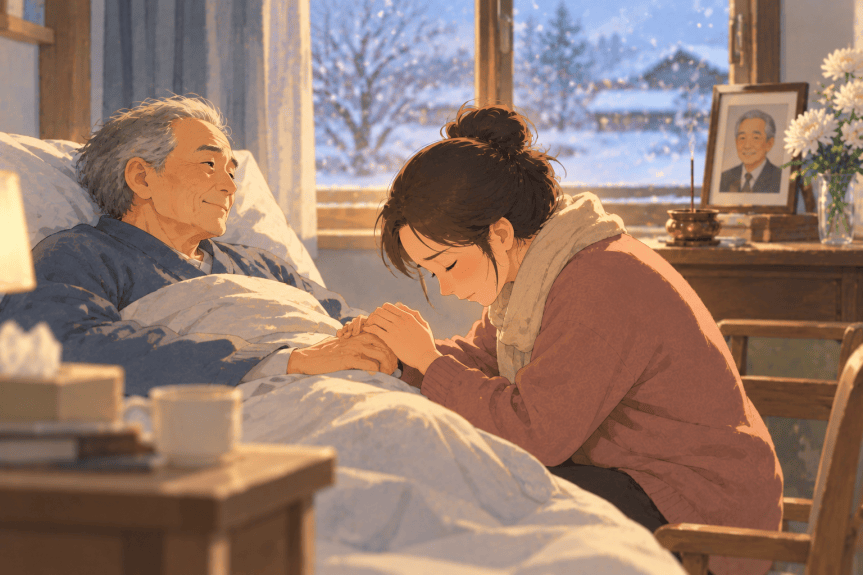
On December 25, 2022, while many people were celebrating Christmas, my father left us
forever.

I held my elderly mother in my arms and dared not shed tears, afraid that seeing my grief
would deepen her sorrow.

After comforting my mother, I softly recited the Kṣitigarbha Sutra beside my father, praying
that he would receive the blessings of the Buddhas and Bodhisattvas and be reborn in one
of the three higher realms or in a Pure Land.

According to local customs in Tianjin, the deceased may be transferred to a mourning hall,
where the family holds memorial rites. Traditionally, the body remains there for three days
so that relatives and friends can come and pay their respects.

After receiving the many relatives and friends who came to mourn my father, I remained
alone in the mourning hall.

Standing before my father’s portrait, I could no longer hold back my tears. I simply let them
flow.

One by one, I told my father all the things I had wanted to say to him over the years but
never had the chance to express.

Perhaps it was only my imagination, or perhaps it was because I missed him so deeply, but
I almost felt that he was right there in front of me, listening as I spoke.

Lament — A Regulated Verse

The desolate winter wind chills me to the bone;
Across the mournful sky, wild geese cry in sorrow.
Weary in both spirit and form of this cold mortal world,
The body now belongs beneath the pure white snow.

A loving father’s warmth has faded like a dream;
Could a child’s devotion ever be in doubt?
A lone chrysanthemum stands by the fence, as though on a distant riverbank.
I gaze sorrowfully into the hazy distance as a thin mist drifts in.

This poem could express only a fraction of the grief within my heart.
No matter how reluctant I was to let him go, my father’s body was eventually reduced to a
bag of ashes and placed inside a small urn.

I could not even be certain whether those ashes truly belonged to the physical body that
had once been my father. But in fact, whether they did or did not no longer mattered. The
body was merely a temporary combination of the four great elements. The “soul” of the
father I had known had already gone somewhere beyond my knowledge.

At that moment, I could not help recalling an impartation from Namo H.H. Dorje Chang
Buddha III
in Philosophical Sayings About Worldly Matters:
“A person grows wiser by learning from the setbacks he suffered. True knowledge
comes from one’s own experience. Secondhand experience is worth little.”

On the journey of life, how can we truly understand the truth of something or gain genuine
insight into our own state of being?

The essential point is that understanding cannot come merely from what we hear, nor
merely from what we see. Beyond seeing and hearing, we must learn to draw experience
and lessons from repeated setbacks and failures. Through practical experience,
verification, and sincere reflection upon our failures, we can gradually develop an inward
understanding of things and come to comprehend the truth.

Therefore, we must personally undergo experiences before we can truly understand them.

If we merely rely on hearsay without personally putting things into practice, what we gain is
not an understanding of their true nature. Only the experience gained through what we have
personally undergone, witnessed, and practiced can lead us to genuine understanding and
truth.

“Life is impermanent” was something I used to say often.

One day, I would talk with someone about how quickly time passes; the next day, I would
speak with someone else about how everything can change in an instant.

But in reality, I had never truly developed a deep awareness of impermanence.
It was not until my father passed away that I was finally awakened to it.
My father had truly given me a profound and painful lesson in impermanence.


Written by: Zai Lu Shang
Edited by: Yuese

Link: https://myhappylifestyle.net/2026/10/11/dorjechangbuddhaiii-covid-19-become-the-final-blow-that-took-my-father-away/

#DorjeChangBuddhaIII #Spirituality #Buddha #Buddhism
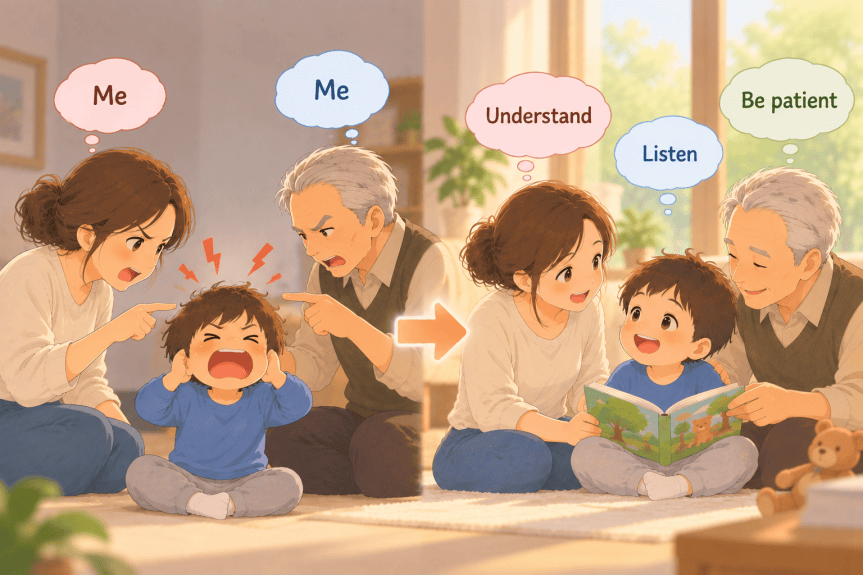
When We Put “Me” at the Center, We Inevitably Find Things Hard to Accept, Hard to Hear, and Hard to Understand

When We Put “Me” at the Center, We Inevitably Find Things Hard to Accept, Hard to Hear, and Hard to Understand

A close friend once complained to me about her child.

“My child is driving me crazy! He’s only four or five years old, yet he can already turn the whole household upside down!”

I asked, “What happened?”

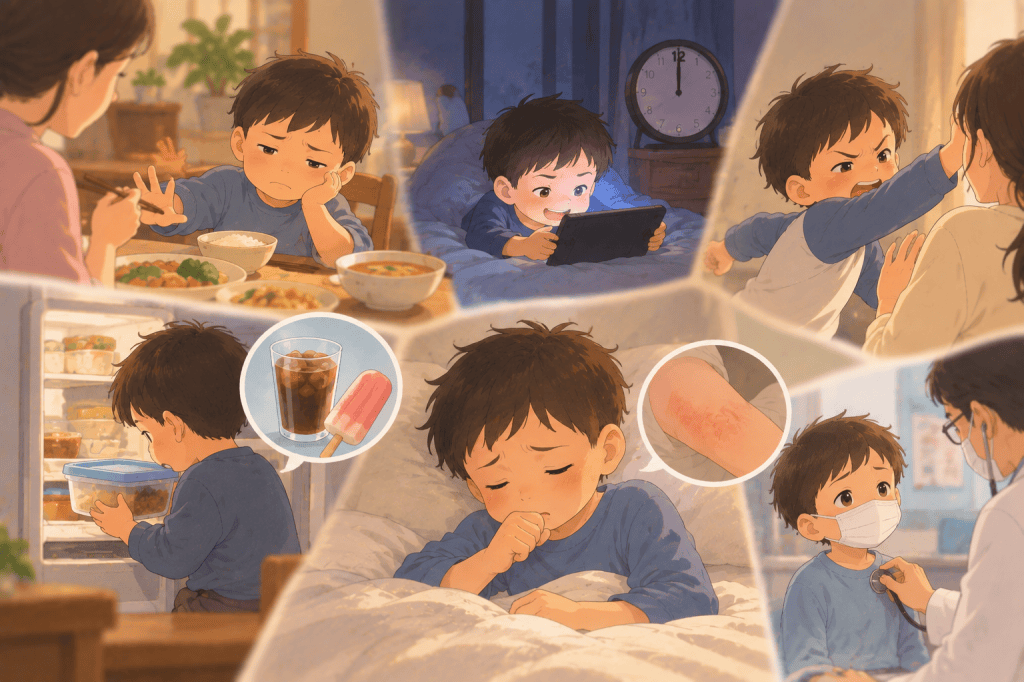
She said, “He refuses to eat properly. After mealtime is over, he goes looking for cold leftovers. He wants to play until midnight, and if we refuse to play with him, he hits us—and he hits hard. Lately, he has been coughing constantly and has eczema all over his body. He has practically become a regular at the hospital…”

His eating habits were irregular, his sleep schedule was irregular, and he loved eating cold foods. With habits like these affecting his digestive health, how could he not get sick?

I then asked, “Do you often hit him? Is that why he has learned to hit others?”

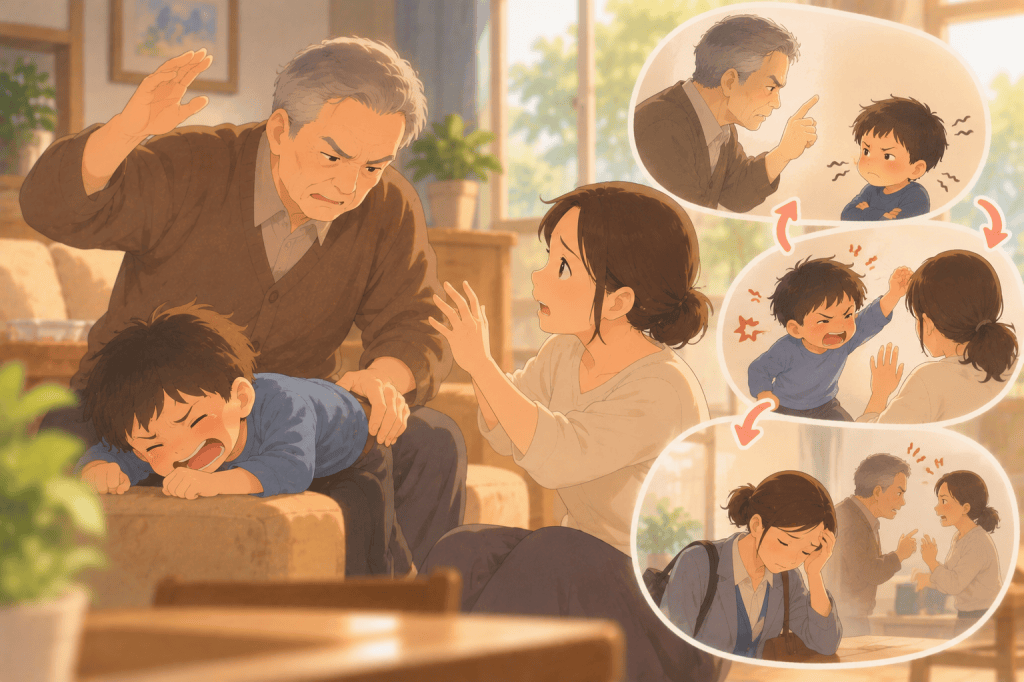
“Ah,” she sighed. “My father believes in strict discipline and corporal punishment. Whenever the child misbehaves, Grandpa gives him a good spanking. I’ve tried talking to my father and asking him not to hit the child so much, but he won’t listen. As a result, the more the child is hit, the more unruly he becomes, and the more unruly he becomes, the more he gets hit. By the time I come home from work, I’m completely exhausted by all of this. Now even my father and I get upset with each other over the smallest things. We find each other’s behavior hard to accept, each other’s words hard to hear, and each other’s thinking impossible to understand…”

I couldn’t help but sympathize with my friend. Her child had not even reached the stage when she would have to help him with schoolwork, yet the household was already in complete chaos.

As the saying goes, “It takes ten years to grow a tree, but a hundred years to nurture a person.” Raising and educating a child is truly no easy task. When family members disagree about how a child should be raised, conflict is almost inevitable.

For many years, educators have advocated encouragement and positive reinforcement rather than corporal punishment. We cannot truly win people over through force; we need to reason with them and reach them through understanding and compassion. Two generations have different life experiences, levels of education, personalities, and understandings of life. Naturally, their approaches to raising a child can be very different. One wants strict and forceful discipline, while the other favors a gentle and patient approach. In the end, neither approach is carried out effectively, and the two sides only grow increasingly frustrated with each other.

But do situations in which people find one another “hard to accept, hard to listen to, and hard to understand” exist only between fathers and daughters? Of course not. Conflicts arise between husbands and wives, relatives and friends, coworkers, classmates, people from the same hometown, and even complete strangers.

Two of my coworkers once had a disagreement over a work assignment.

Coworkers A and B were responsible for producing the company magazine. A handled planning, editing, proofreading, and communication with the printing company, while B was responsible only for layout and typesetting. Because they were rushing to meet the deadline, A reviewed three rounds of proofs, checked the sample copy, and then authorized printing.

The following day, A looked through the sample again and discovered that the month printed on the cover was incorrect. During proofreading, A had already asked B to correct it. However, B had carelessly failed to properly save the final revised file, so the error remained. At the same time, A had also failed to notice the mistake when reviewing the sample copy.

When they contacted the printing company again, they learned that the company magazine was already being printed. Reprinting the cover would require additional expense. And so, a loss that should never have occurred was incurred.

A blamed B: “Why didn’t you properly save the file after making the correction? Why didn’t you take responsibility for your work?”

B, in turn, blamed A: “Why didn’t you carefully check the sample?”

Each found fault with the other. Neither wanted to hear what the other had to say, and neither could understand how the other could have been so careless.

In fact, both of these real-life situations—the disagreement between father and daughter over how to raise the child and the conflict between coworkers caused by a lack of carefulness—stemmed from putting “me” at the center.

The grandfather thought, “If my grandson doesn’t behave, he needs to be disciplined physically. After all, this is how I raised several children.”

The mother thought, “When my son misbehaves, adults should reason with him. We shouldn’t substitute punishment for proper guidance. We should teach him gently and patiently.”

And what about the two coworkers?

One thought, “I already checked everything thoroughly.”

The other thought, “You were the one who failed to check carefully.”

Because they failed to cooperate effectively, mistakes naturally occurred.

Yet the father and daughter actually shared the same goal: to raise the child well.

And the two coworkers also shared the same goal: to produce the magazine well.

The attitude of “I don’t care what you think; what matters is what I think” places the self above everything else.

If people want to live together harmoniously, they need to learn to put themselves in one another’s shoes. If the grandfather listened to his daughter’s suggestion to use gentleness rather than force, and if the daughter communicated more patiently with her elderly father about ways of educating the child, wouldn’t their relationship become more harmonious?

Likewise, if the two coworkers showed greater understanding toward each other’s responsibilities, reminded one another when necessary, and complemented each other’s work, wouldn’t they be able to accomplish the task successfully? What would there be to argue about?

As Namo H.H. Dorje Chang Buddha III said:

“A protracted dispute is wrong on both sides. Why? Entangled in such a dispute, both sides see only the faults of the opposing party and the merits of his own. Continuing dispute will but increase the wrongdoing. When one realizes that the other party is as annoyed as he is, one is apt to withdraw from the dispute.”

By letting go of attachment to the self and our own views, and by learning to be tolerant and understanding of one another, we become able to listen to other people’s opinions and recognize their strengths. In this way, we can gradually move from stubbornly clinging to our own views toward accepting and appreciating others.

Always remember: “I” am not the measure of the world.

If we always put “me” first in everything, we are simply creating trouble for ourselves. Instead, we should think: I am a Buddhist practitioner who still has much to be ashamed of. I still have many shortcomings and faults. I should learn more from the strengths of others and spend less time looking for their faults.

As the saying goes:

“The sea is vast because it embraces hundreds of rivers; a person is great because of the capacity to be tolerant.”

When we broaden our hearts and minds, expand our perspective, and elevate our moral character, our work and our lives can proceed more smoothly. We can gradually move away from selfish attachment to the self and toward benefiting both ourselves and others.

Isn’t letting go of the constant focus on “me” itself part of cultivation?

Written by: He Suoyou

Link: https://myhappylifestyle.net/2026/09/28/dorjechangbuddhaiii-when-we-put-me-at-the-center/

#DorjeChangBuddhaIII #Spirituality #Buddha #Buddhism
Do Not Laugh at the Dreams of Youth

Do Not Laugh at the Dreams of Youth

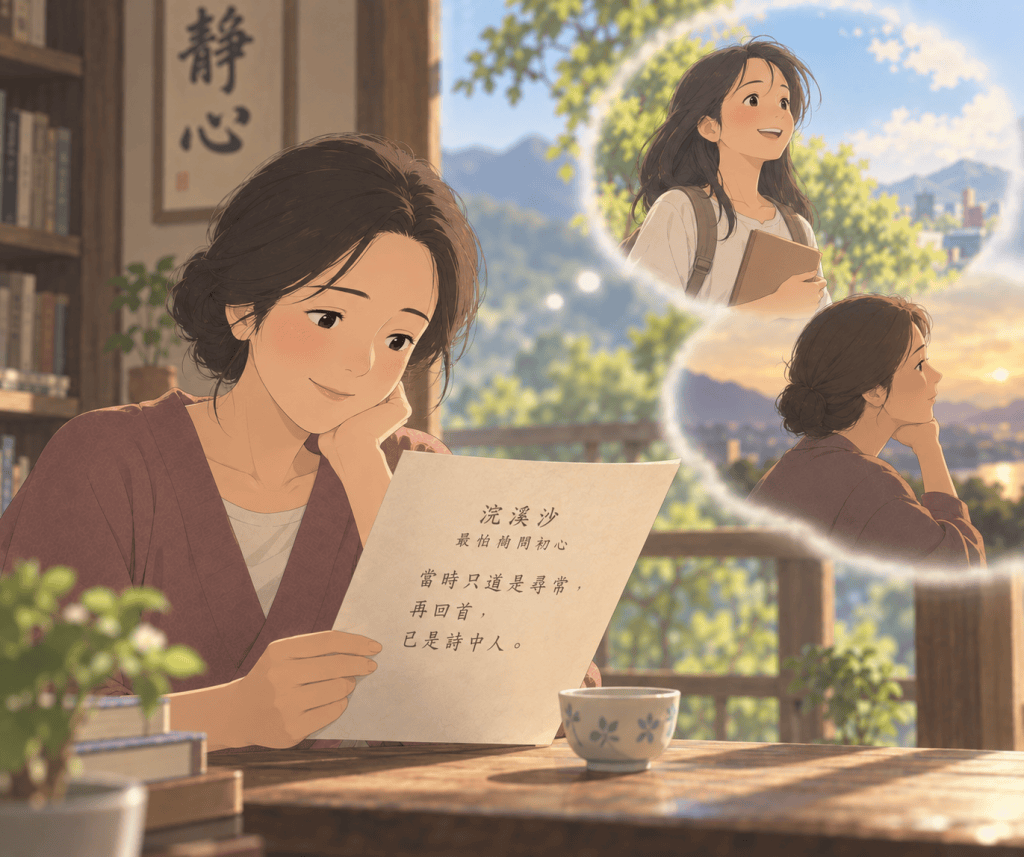
Recently, I happened to come across the poem Huan Xi Sha: What I Fear Most Is Being Asked About My Original Aspirations. Reading it in middle age filled me with countless emotions, and its meaning lingered deeply in my mind. It gave me the feeling that, “When I first heard these words, I did not understand their meaning; when I heard them again, I had already become the person described in them.”

How could these few short lines not be a reflection of the life I am experiencing today?

What I fear most is being asked about my original aspirations,
Only to realize that my dreams have faded into emptiness.

In youth, I aspired to journey three thousand miles,
Yet after hesitating for a hundred steps, I had accomplished nothing.

In the blink of an eye, my parents’ hair has turned white,
While my children, still taking unsteady steps, have begun their schooling.

The need to earn a few pieces of silver hastens the passing of the years.
My heart remains young,
Yet wrinkles have quietly appeared upon my brow.

In this fleeting life, I drink and drift back into dreams.
Youth has passed, though I still feel like the person I once was.
I can only sigh at how swiftly time has flown.

Do Not Laugh at the Dreams of Youth

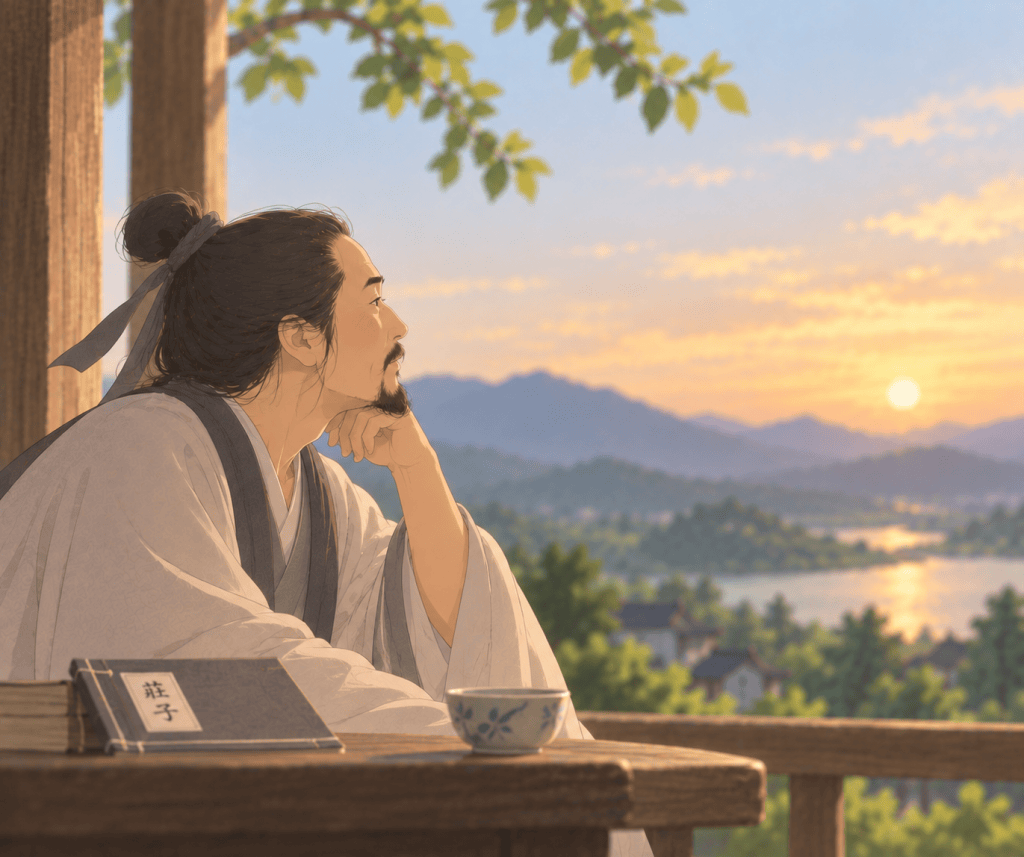
Zhuangzi said:

“A person’s life between heaven and earth is like a white colt glimpsed through a crack—it passes in an instant.”

Do Not Laugh at the Dreams of Youth

Looking back upon the road we have traveled, we realize that throughout our lives, we have grown, encountered countless people and experiences, and then bid them farewell one after another. Between flowers blooming and falling, countless beautiful moments have already become memories. Amid gains and losses, sorrow and joy, so much of the past has vanished like drifting clouds and smoke.

Do Not Laugh at the Dreams of Youth

As the saying goes:

The green mountains never grow old, yet I never find rest;
All my life, I toil simply to make a living.

After decades of wind and rain,
In the blink of an eye, we may already be buried beneath the earth.

I laugh because the green mountains never change,
The mountains laugh because I have already grown old.
Like an ox that toils into old age, never knowing a day of rest;
By the time rest finally comes, one has already been laid to rest in the mountains.

How many people have lived exactly this way, passing hurriedly through an entire lifetime burdened with regrets and helplessness?

Time always seems to slip away without our noticing, and often we realize its passing only afterward. There are things whose preciousness we understand only after we have completely lost them. Then we cannot stop thinking about them and regret that we did not cherish them when we had the chance.

But the years pass swiftly. How could time ever allow us to remain lost in a dream while our lives quietly grow shorter? Impermanence is the true nature of worldly existence. The past is like tea—only after tasting it do we come to understand how important it is to cherish the present.

Everything in this world that we have decided to do should be acted upon with determination. We should not postpone it until after we have rested for a while, until tomorrow, or until some future opportunity.

Nor should we allow a small setback to make us procrastinate day after day, sighing in discouragement, overwhelmed by worry, and losing our courage. If we allow ourselves to be completely defeated by setbacks, the undertaking can no longer succeed.

Therefore, when we encounter difficulties, we should promptly transform pessimism and negative emotions into strength—and replace hesitation with action.

I remember that in Journey to the West, after Sun Wukong, the Monkey King, was imprisoned beneath the Five Elements Mountain, the song Five Hundred Years of Changing Seas and Mulberry Fields expressed the following idea:

Five hundred years—the seas and fields have changed places,
Even the stubborn stone has become covered with moss.
Yet one heart has never died,
Still yearning for freedom.

Even if wildfires burn,
Even if ice and snow cover the earth,
The aspiration remains unchanged,
And faith remains unshaken.

Was it not precisely because Sun Wukong endured five hundred years of hardship without allowing his determination and longing for freedom to be extinguished that he ultimately had the opportunity to embark upon the journey to obtain the Buddhist scriptures?

Namo H.H. Dorje Chang Buddha III taught:

Once you are set to achieve a goal, pursue it with doggedness and refuse to be distracted by anything deceptively attractive. A mountain climber should not stop to pick leaves and branches on the way, or he will never reach the top. This applies to everything.

The Buddha clearly teaches us here that once a person has made a specific and proper vow and established a goal, that person should strive to bring it to fulfillment and work diligently to turn that aspiration into reality. One must not become distracted by illusory circumstances encountered along the way and consequently stop moving forward.

Those who aspire to accomplish a great undertaking and ultimately reach the summit must not waste their time plucking leaves and grasping branches halfway up the mountain. Nor should they allow themselves to be detained by an illusory city, becoming content with having reached it and no longer wishing to continue.

Do Not Laugh at the Dreams of Youth

If we stop at such an illusory city, we will never accomplish our ultimate goal, nor will we ever reach the summit.

Life continually presents us with challenges, and we learn to deal with each one as it comes. The setting sun sinks into the mountains and sea; Within them lies a profound meaning.

Looking back, we may suddenly realize that, without even noticing it, we have already endured and overcome many hardships. Through them, we have become people who can gradually heal ourselves even while struggling through moments when everything seems to be falling apart.

No matter how many setbacks we encounter or how much suffering we must endure, as long as our minds do not become attached and we face circumstances with calmness and composure, even the greatest difficulties can eventually be faced and overcome.

Author: Fuyao Zhishang

Link: https://myhappylifestyle.net/2026/09/19/dorjechangbuddhaiii-do-not-laugh-at-the-dreams-of-youth/

#DorjeChangBuddhaIII #Spirituality #Buddha #Buddhism
There Is No Generation Gap—Am I the North Wind or the Sun?

There Is No Generation Gap—Am I the North Wind or the Sun?

There is a saying: “If you have never experienced what others have gone through, do not be quick to judge their faults. If you have never endured their suffering, do not be quick to tell them how they should behave. If you had suffered what I have suffered, you might not have done any better than I did.” Such a simple truth—yet I never realized how poorly I had practiced it in the past.

Ever since I was young, my father had raised me with a strict and authoritative approach. This was very different from my relationship with my mother, with whom I always seemed to have endless things to talk about.

As I grew older, friction between my parents gradually increased, leaving many negative impressions deeply embedded in my mind. My father and I rarely talked. Whenever my parents had a disagreement, I invariably took my mother’s side without trying to view the situation objectively. As a result, my misunderstandings of my father grew deeper and deeper.

During the years when I suffered most severely from illness, my father took care of me tirelessly and without complaint. Although I was deeply moved by everything he did for me, for some reason I could never let go of the memories of his arguments with my mother. Deep inside, I still harbored resentment toward him.

After my mother passed away, my father was overwhelmed with grief. Yet he often pulled himself together to encourage me, simply because he was afraid that remembering my mother would make me sad and bring me to tears.

Now that only my father and I remained to keep each other company, the awkwardness of having so little to talk about became even more apparent. Sometimes when I accompanied him on walks, I would become impatient when he repeatedly talked about things from the past. Although this was his way of expressing his emotions, I failed to recognize the helplessness and loneliness hidden behind his words.

Instead, I behaved almost like a fault-finding inspector. Even as I listened to him, I would contradict or correct him. Our conversations would often end with him saying, “If you don’t like talking to me, at least don’t lose your temper with me!”

I do not know how many times this pattern repeated itself. Then one day, I suddenly became alarmed by my own conduct. I realized what an inconsiderate daughter I had been. I had continued to hold on to the painful memories of my parents’ arguments, and because of that, I had never truly listened to what was in my father’s heart.

I began to think: We can change ourselves without demanding that others change, can’t we? Moreover, how could I possibly understand all the causes and conditions underlying the relationship between my parents?

I therefore resolved to become a gentler and more understanding daughter. I began training myself to truly listen, to let go of the burdens and attachments of the past, and to sincerely fulfill my filial duty toward my father.

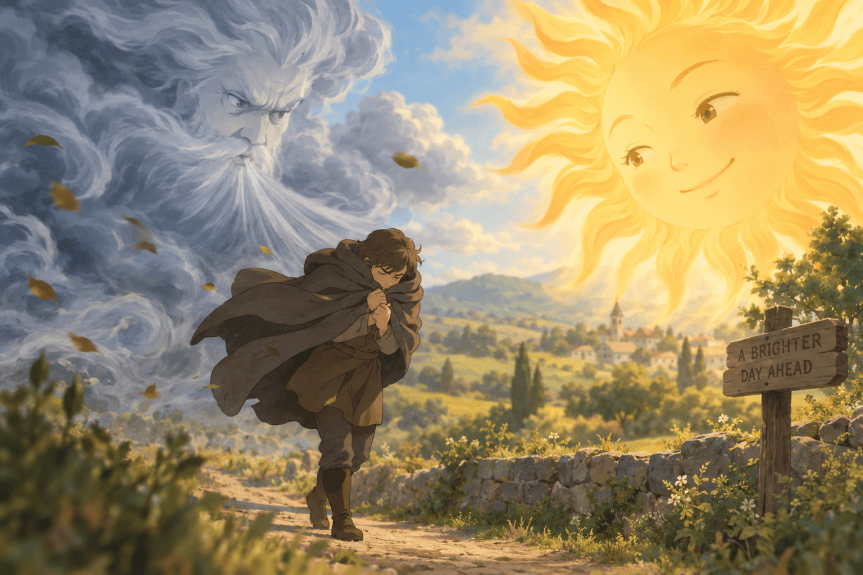
It reminded me of Aesop’s famous fable, “The North Wind and the Sun.” I was determined to be the sun!

Gradually, my relationship with my father became more and more harmonious. Whenever I am not by his side, I call him at a regular time each day to see how he is doing. When I return home, I also make an effort to spend more time talking with him. Over time, my father has come to feel that I genuinely care about him.

My father and I had once been almost like strangers, but now we live together in harmony. I deeply understand that this transformation came about through genuinely learning and practicing Buddhism. It is also a result of frequently listening respectfully to the Dharma discourses expounded by Namo H.H. Dorje Chang Buddha III, through which I received purification and blessings.

The Buddha Dharma exists in this world and is inseparable from awakening within this world. There is no knot in life that cannot be untied. What matters is whether we are willing to let go of our attachments and make the change.

Link: https://myhappylifestyle.net/2026/09/08/there-is-no-generation-gap-am-i-the-north-wind-or-the-sun/

#DorjeChangBuddhaIII #Spirituality #Buddha #Buddhism

When I Came to Understand the Pain Deep Within My Mother’s Heart

When I Came to Understand the Pain Deep Within My Mother’s Heart

Through participating in group study, respectfully and deeply listening to the Dharma discourses expounded by my Buddha Master, Namo H.H. Dorje Chang Buddha III, and sharing what I had learned with others, I gradually came to understand and feel the pain deep within my mother’s heart.

For as long as I can remember, my parents were constantly arguing. During holidays and festivals in particular, our home would become filled with tension. After an argument, my mother would always wear a stern expression and remain silent, while my father would sigh repeatedly, not knowing what to do.

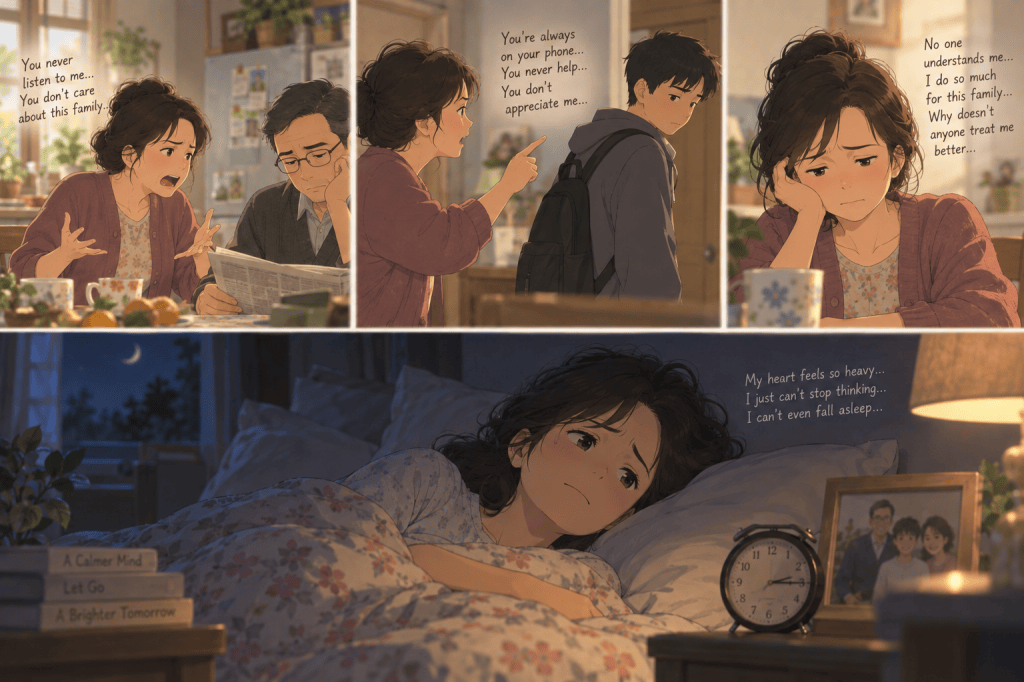
After encountering the Tathagata’s True Dharma taught by H.H. Dorje Chang Buddha III, I wanted to resolve a question that had puzzled me for a long time: My mother had everything she needed in terms of food and clothing and was free from serious illness or misfortune, so why did she complain every day? She would either say that my father did not treat her well or feel that my younger brother and his wife did not treat her well. She would become so upset that she sometimes could not sleep all night.

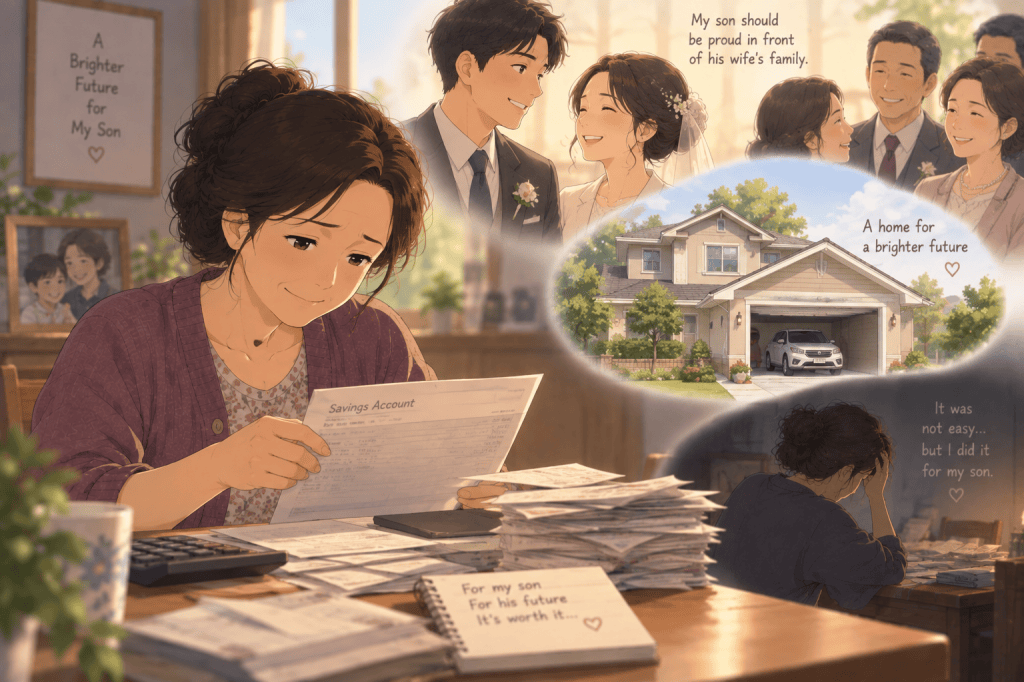
My mother cared greatly about maintaining appearances, even when doing so caused her hardship. She especially doted on my younger brother, whom she treasured dearly. To ensure that he could hold his head high in front of his wife’s family, my mother used almost all of her savings to buy them a home and a garage.

Whenever there was an important occasion or even a smaller matter involving my sister-in-law’s family, my mother always handled everything generously and properly. She would rather live frugally herself than allow my brother to lose face.

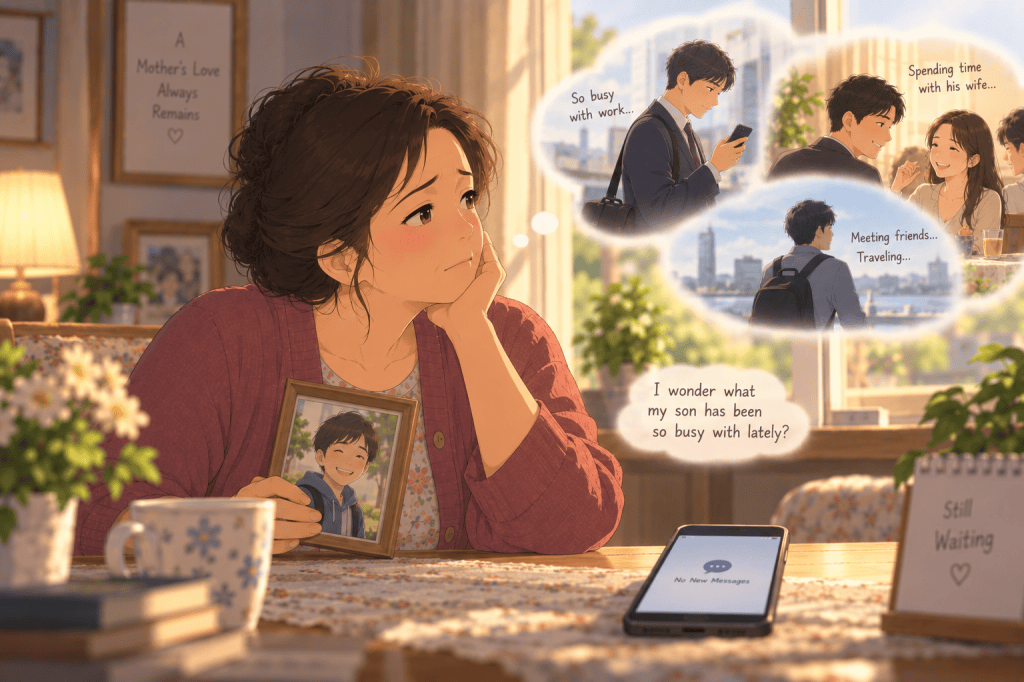
Yet despite all she had done, my brother seldom contacted her. Although they lived in the same city, he rarely checked in on her, much less came to see her. I could feel how deeply my mother missed her son. She would often ask me, “I wonder what your brother has been so busy with lately?”

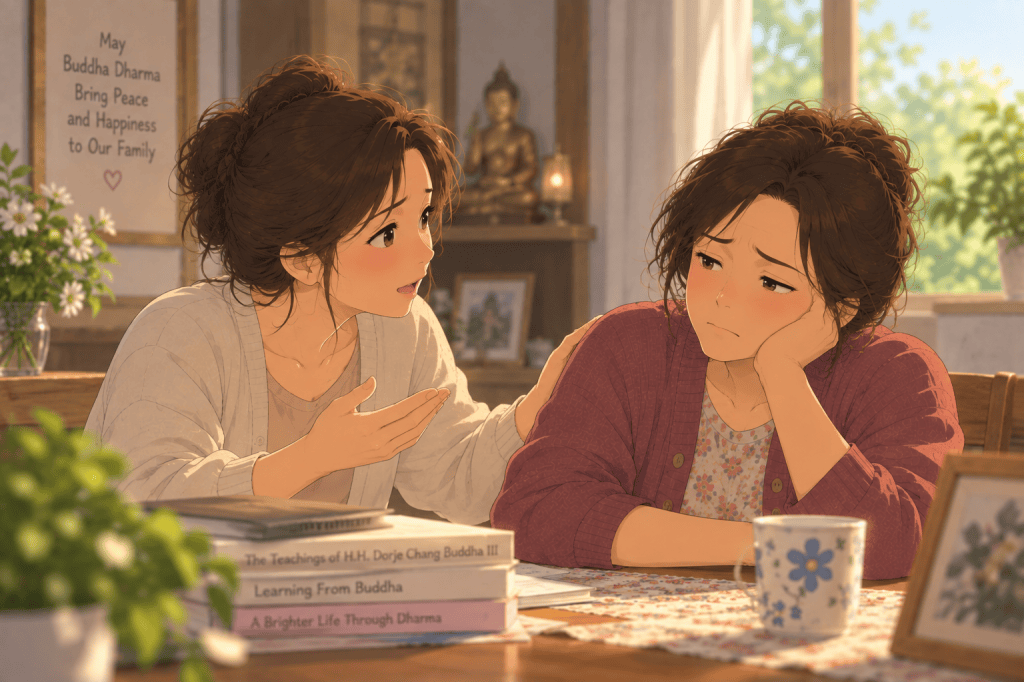
To tell the truth, seeing my mother like this made my heart ache, and I also felt deeply concerned about my inability to help her. How I wished she could learn the true Dharma of the Tathagata with me! After all, it was through learning the true Dharma of H.H. Dorje Chang Buddha III and developing right understanding and right views that I myself had been able to free myself from the suffering caused by my divorce.

Having personally experienced the benefits of learning Buddhism and cultivating myself, I tried to persuade my mother not to dwell on the things that troubled her. I explained to her that these circumstances were the result of causes, conditions, and karmic forces planted in the past. But she did not agree with what I told her.

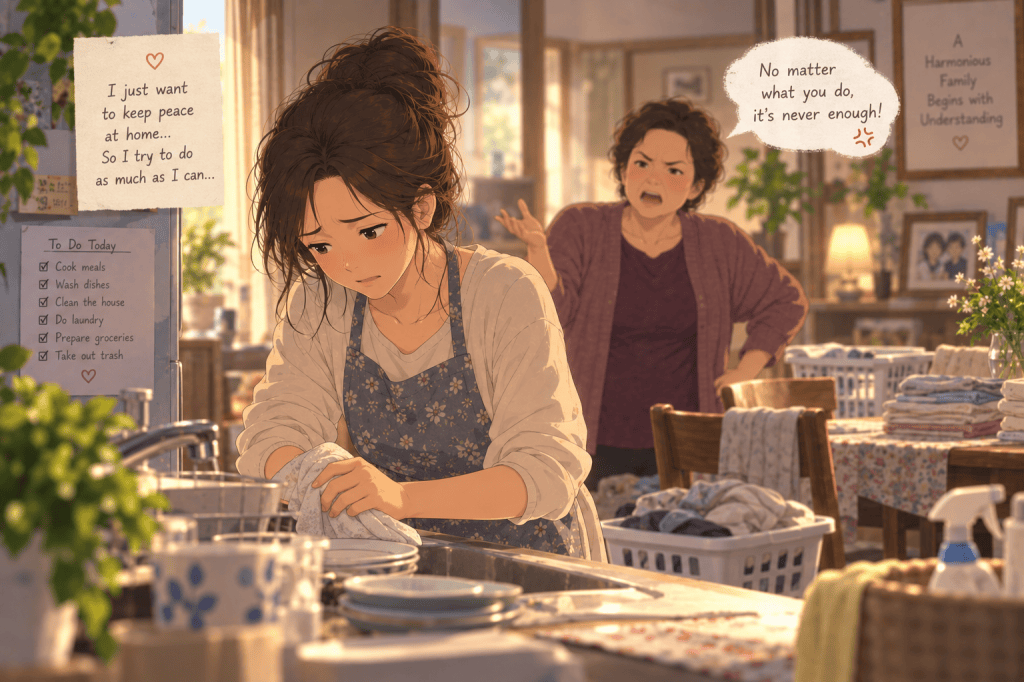
To avoid upsetting my mother, I tried to take care of nearly all the household chores myself so that she would have to do as little as possible for my single-parent household. Yet strangely, the more responsibilities I took upon myself, the more upset she seemed to become. No matter what I did, I could not seem to make her happy.

Back then, I lived very cautiously around her, afraid that something I said or did might cause her to become upset and silently resentful. I also tried communicating with her, but she would often remain silent and keep everything bottled up inside.

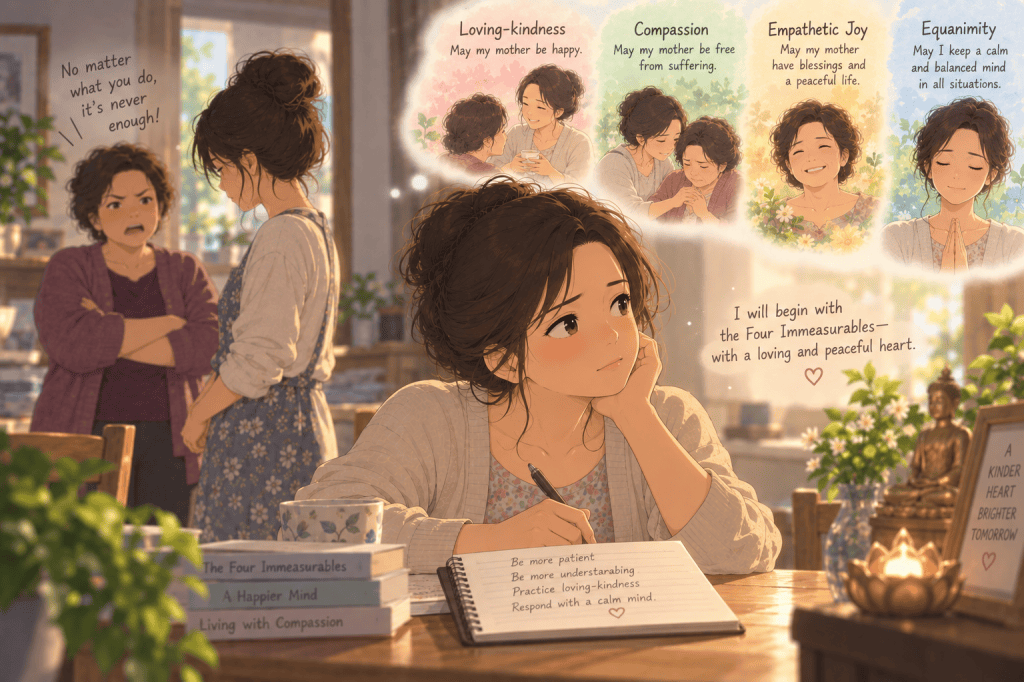
Through respectfully studying Expounding the Absolute Truth Through the Heart Sutra, I brought forth right mindfulness and finally came to understand how I should correctly practice the Four Immeasurables of loving-kindness, compassion, empathetic joy, and equanimity. I first needed to begin with equanimity and selfless giving—to be willing to devote my time to considering the needs of my family. Caring for them was not merely about making sure they had enough food, warm clothing, and money to spend. I also needed to learn to recognize and understand the suffering within their hearts.

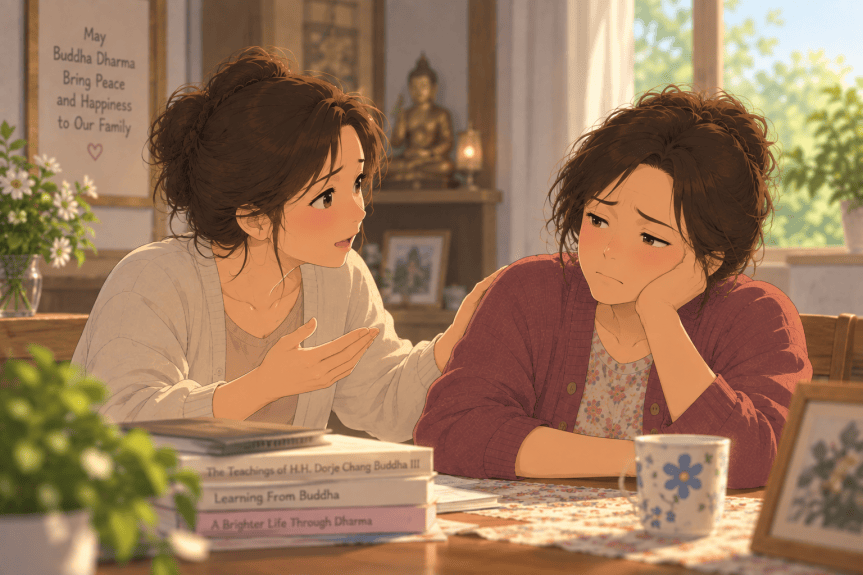
I began to sincerely spend time with my mother, and gradually I discovered that the ice within her heart was beginning to melt. Instead of telling her, “Don’t be angry anymore” or “Don’t hold on to resentment,” I began placing the responsibility upon myself: I needed to understand the pain within my mother’s heart, listen to what her heart was trying to tell me, help heal her emotional wounds, and help her establish right understanding and right views.

When my mother complained, I became willing to set aside my time and sit quietly beside her, listening attentively. I no longer used the principle of “cause and effect” to argue with her until she had nothing left to say.

When she felt physically tired, I would take the time to massage the acupressure points on her feet and ask her whether the pressure was too light or too strong. When she felt bored, I would willingly spend time with her and chat about everyday family matters instead of lecturing her about principles and doctrines.

The more I tried to understand the pain in my mother’s heart, the more she began saying things like, “Don’t waste your time on me. I don’t need you to keep me company. Go take care of the children. Once you’ve taken care of everything for them, go do whatever you need to do.”

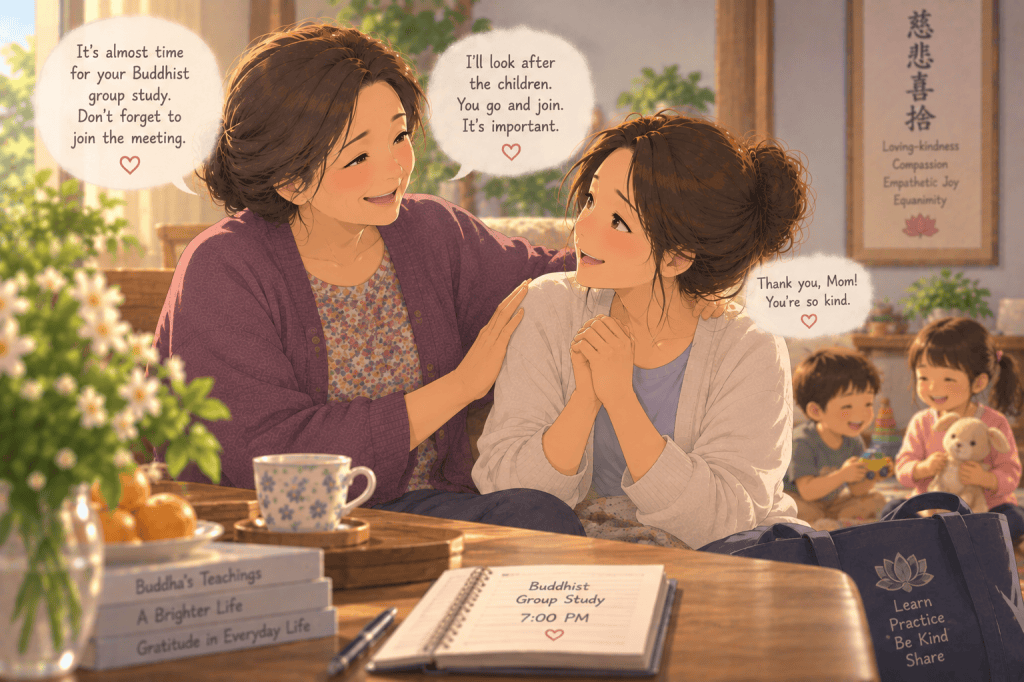
What surprised and delighted me even more was that my mother eventually began reminding me herself, “It’s almost time for your Buddhist group study. Don’t forget to join the meeting. I’ll help you look after the children.”

I had finally gained my mother’s support. And it happened simply because I had learned to recognize the pain within her heart and was willing to devote my time to sincerely being there for her.

This is exactly what the H.H. Dorje Chang Buddha III teaches in the Dharma discourses: we must put our cultivation into actual practice and cultivate ourselves with respect to the three karmas of body, speech, and mind. We must be sincere in our words and actions and in the way we interact with and treat others. Only by putting genuine effort into our conduct in everyday life can we truly touch the hearts of others.

Contributed by: Ji Cheng / Kui Xing

Link: https://myhappylifestyle.net/2026/09/06/dorjechangbuddhaiii-when-i-came-to-understand-the-pain-deep-within-my-mothers-heart/