
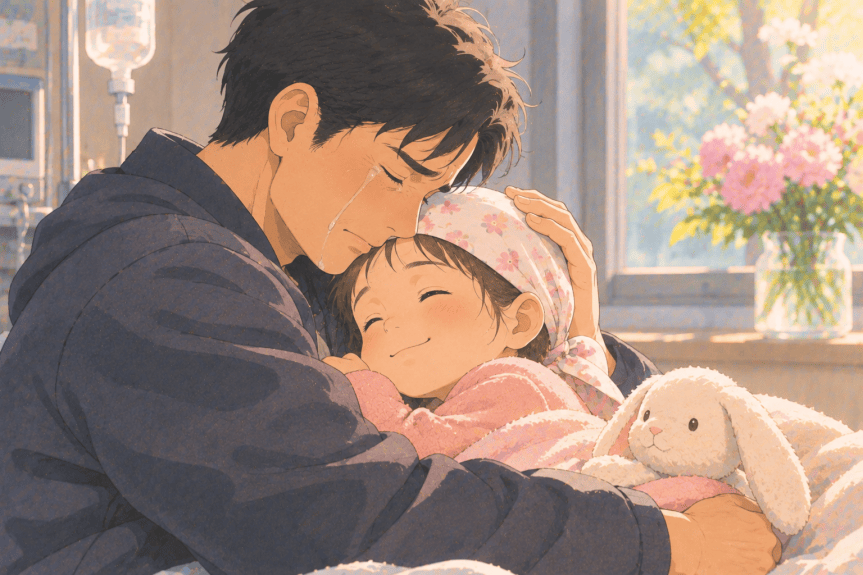
The Secret to Making Peace with Our Own Suffering
Five-year-old Yiling, the little “cancer-fighting warrior” whose father donated part of his liver in an effort to save her life, ultimately did not survive the bitter winter. Her young life came to an end at 12:03 p.m. on December 26.
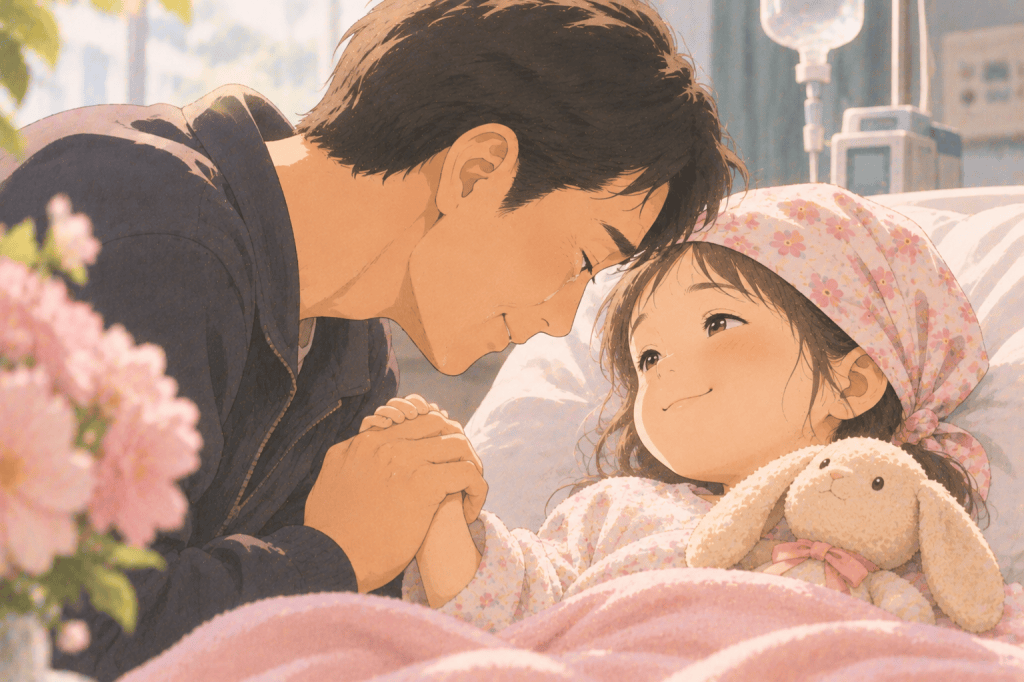
In this heartbreaking true story, her father wrote these final words to his daughter:
“Yiling, are you cold? Remember to keep yourself covered with a blanket, okay?”
Little Yiling was gone. Yet for her father, who had fought so courageously alongside his daughter, her passing did not feel like the lifting of a burden. Instead, it felt as though he had lost the very pillar that had supported his daily life.
“What can I possibly do? Whether I gain something or lose it is beyond my control.”
His confession in a video revealed his profound helplessness. Afterward, he emptied his online sales storefront and posted one final message:
“I will no longer sell products or accept advertisements. My child is gone. All the money earned has been refunded. For those who blocked me, I can no longer return your money.”
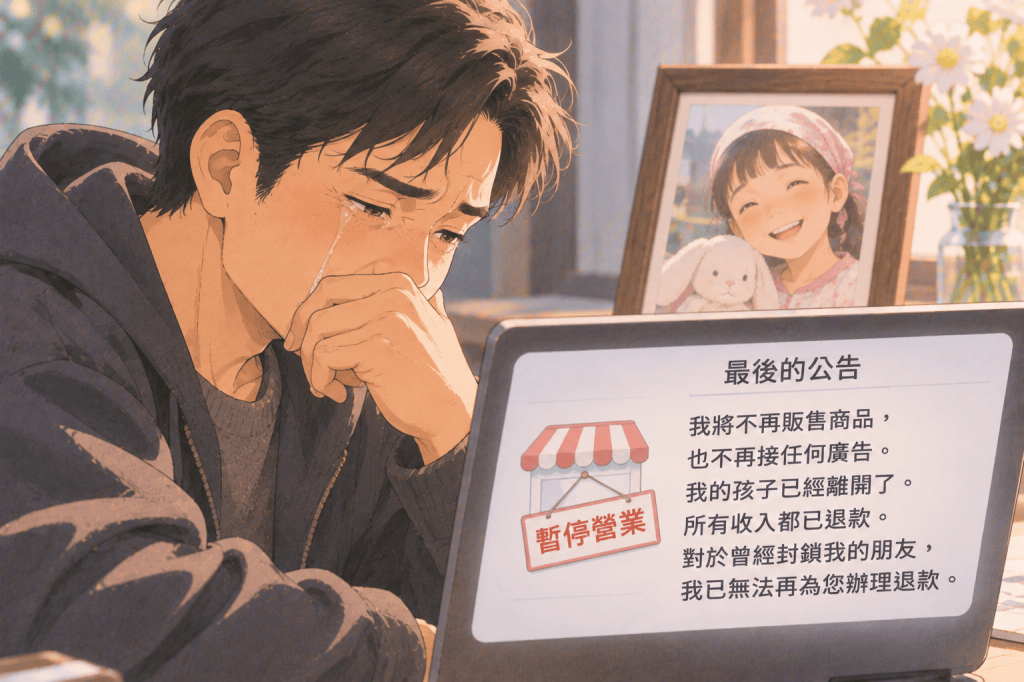
Yiling’s father was still struggling to come to terms with his daughter’s passing.
“For five and a half years, this was my life. I don’t know how I will ever find peace in the days ahead. Before, I would get up at seven every morning to give my daughter her medicine. By eight, she would be awake. I would dress her, wash her face, brush her teeth, prepare breakfast, and take her outside to play. Day after day, this was our routine.
“But now, every morning when I open my eyes, all I have are memories of those moments we shared. There is no one beside me anymore. I lie there quietly, all alone. My daughter, how could you leave me here by myself? What am I supposed to do?”
It was as though this grieving father was speaking to his beloved daughter in heaven.
Life in this world inevitably comes with regrets. Not getting what we long for is part of the human experience, and imperfection is an unavoidable reality of life.
The writer Yang Jiang is often credited with these words:
“Time brews the rain, and the passing years weave flowers. In this ordinary world, everything carries regrets, yet everything is also worth cherishing.”
When faced with an outcome we cannot change, we must learn to accept life’s imperfections, make peace with ourselves, and remain grounded in the present moment.
Nothing in this world belongs to us forever—not even the people we love most, the children we raise, our wealth, or our own bodies. Ultimately, everything returns to dust. We are merely travelers passing through this life, and what matters most is making good use of the present moment.
The ancient Greek philosopher Epictetus once expressed a principle along these lines:
“When dealing with things beyond our control, we should remain optimistic and confident. When dealing with things within our control, we should exercise caution and restraint.”
In other words, when circumstances are beyond our control, anxiety and fear accomplish nothing. Anxiety cannot change tomorrow; it only disturbs our peace of mind today. Fear cannot change tomorrow either, for the only thing we truly have to fear is fear itself.
However, when it comes to matters within our control, we should act with caution and moderation. Without prudence and self-restraint, excessive pleasure and indulgence may eventually lead to sorrow.
Throughout our lives, we encounter countless difficulties and obstacles. No one can predict what will happen in the next moment. All we can do is cherish the present and strive to conduct ourselves well.
Cherish the happiness before you, rather than waiting until it is gone to feel regret. Value everything you have worked for, and do not give up too easily. What has been lost may never be recovered, and opportunities abandoned may never return.
Flowers wither, yet bloom again the following season. Grass dries up, yet sprouts anew the next year. The four seasons come and go in an endless cycle, but human life is different. We are not flowers or grass. Our time in this world is brief, and we have only one lifetime. Once it comes to an end, it cannot be lived again.
Life is a fleeting journey, and what matters most is making the most of the present.
I remember a short Russian poem that, when translated into Chinese, seemed especially beautiful despite its simplicity:
“A day is so short that before we have time to embrace the morning, we are already holding the evening in our hands.
“A year is so short that before we can fully savor the vibrant blossoms and fresh greenery of early spring, we must prepare to welcome the frost-covered autumn.
“A lifetime is so short that before we have fully enjoyed the beauty of our youth, we have already entered the twilight of our years.”
One of the most precious things in this world is neither what we have yet to obtain nor what we have already lost, but what we still possess and should cherish.
As Buddhist disciples often recite:
“How difficult it is to obtain a human body, yet now I have obtained one. How rare it is to encounter the Buddha Dharma, yet now I have heard it. If I do not seek liberation in this lifetime, in what future lifetime shall I do so?”
In this lifetime, not only have we obtained the precious opportunity of human existence, but we have also been fortunate enough to encounter Namo H.H. Dorje Chang Buddha III during His time in this world.
By immersing our hearts and minds in the Dharma discourses of Namo H.H. Dorje Chang Buddha III and properly applying their teachings to our conduct of body, speech, and mind, we are, in a sense, equipping ourselves with protective armor and strengthening ourselves spiritually. It is also like cleansing ourselves with the water of the eight merits and virtues of the Buddha Land, washing away karmic obstacles accumulated since beginningless time and increasing immeasurable blessings and wisdom.
Therefore, for those who are just beginning their Buddhist cultivation, immersing and strengthening their bodies and minds with the pure and authentic truths taught by the Buddha, and using these teachings to guide their practice, is the safest, most reliable, and most effective way to grow and progress rapidly on the path of Buddhist cultivation.
When this rare lifetime, in which we have had the extraordinary opportunity to encounter the Buddha, comes to an end, if we remain ordinary beings who have not yet broken free from the chains of reincarnation, where will we seek the path to liberation?
Therefore, as Buddhist disciples, we must treasure this exceptionally rare and precious blessing. We must make the best use of our time by listening to the Dharma discourses of Namo H.H. Dorje Chang Buddha III and respectfully studying the precious Dharma teachings imparted by the Buddha.
Through these teachings, we should strive to strengthen and equip our minds as quickly as possible, establish firm and correct understanding and views, and cultivate ourselves in accordance with the Dharma so that we may attain accomplishment and liberation.
To cherish the Dharma discourses of the Tathagata is, in essence, to cherish ourselves.
Written by: On the Road
Link: https://myhappylifestyle.net/2026/11/15/dorjechangbuddhaiii-secret-to-making-peace/
#DorjeChangBuddhaIII #Spirituality #Buddha #Buddhism

