
Once You Possess This Essential Soft Skill in Life, Never Let It Go

Once You Possess This Essential Soft Skill in Life, Never Let It Go

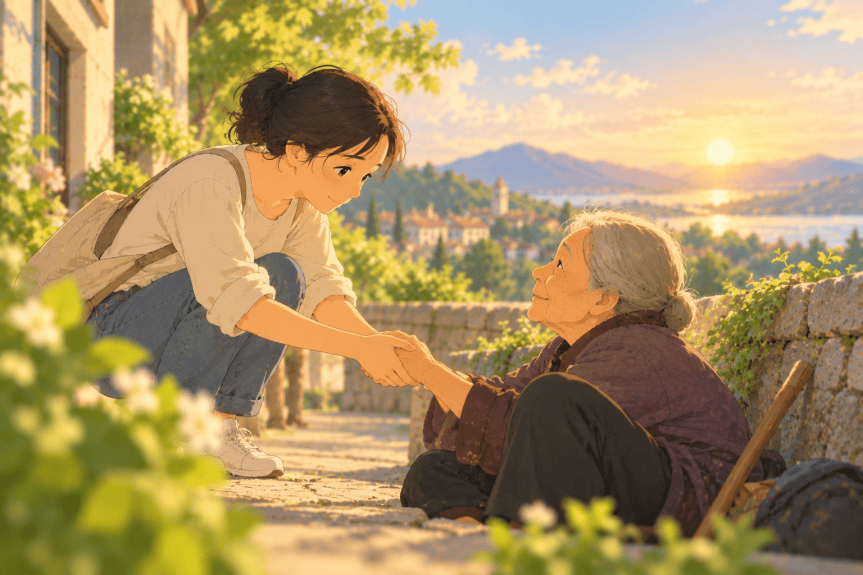
“If you do good, people will accuse you of selfish ulterior motives. But do good anyway.

The good you do today will be forgotten tomorrow. But do good anyway.

If you are successful, you will win false friends and true enemies. But succeed anyway.

What you spend years building may be destroyed overnight. But keep building anyway.

People with the greatest minds and the most generous hearts may be struck down by people with the smallest minds. But think big anyway.

People really need help, but they may attack you if you do help them. But help people anyway.

Give the world the best you have, and you may get kicked in the teeth. But give the world the best you have anyway.”

The above words are often attributed to Mother Teresa. They reflect a Catholic perspective on good deeds and benevolent intentions.

I once came across another thought-provoking passage:

“Just because you cannot bear to see others doing well does not mean they are doing poorly. But it certainly means that something is lacking within you, because your heart is devoid of goodness. When you sincerely wish others well, they may not necessarily prosper. But you are certainly a good person, because your heart is filled with kindness.”

I find these words particularly meaningful. The way you treat others often influences how they treat you in return. Therefore, when you strive to be a kindhearted person, you become more capable of recognizing and appreciating the kindness of others.

A person’s kindness is one of the most important soft skills for surviving, striving, and succeeding in society—and indeed, throughout life. Once you possess this invaluable quality, never let it go. Instead, hold on to it and persevere to the very end.

An ancient saying expresses this principle simply and clearly: “Those who give love receive love in return; those who bring blessings to others receive blessings in return.” In essence, goodness given will be returned with goodness, and kindness extended will be reciprocated with kindness.

Every act of kindness we extend to others may eventually return to us in another form, at a particular time and place. This is what we call gratitude and the repayment of kindness.

Sometimes, performing good deeds is like calling out into an empty valley. The echo may not return immediately. Instead, the sound travels farther, reaching other places and allowing more people to hear and carry it forward. By the time that kindness eventually finds its way back to you, it may have taken on a different form, but it will have gathered even more goodwill along the way.

Kind thoughts and good deeds are also like dandelion seeds. Carried by the wind, they scatter far and wide, take root, sprout, grow, and blossom, eventually spreading goodness across the land.

Namo H.H. Dorje Chang Buddha III, the Buddha residing in this world, also teaches us in Philosophical Sayings About Worldly Matters:

“What makes the sun the greatest thing man has ever known? It is admired for providing light and warmth for all the beings under it. A truly great person is one who is willing to sacrifice his own benefit for the well-being of others.”

Why is the nature of the sun considered so great? It is because the sun burns itself to bring light, warmth, and energy to the world. It enables plants to grow and allows humans and animals to survive. In other words, the sun provides the essential conditions that sustain life on Earth and bestows countless benefits upon all living things. That is why everyone praises its greatness.

The same principle applies to us as human beings. If we can act without selfishness or self-interest, dedicate ourselves quietly to serving others, and even be willing to make personal sacrifices for the benefit of the public, bringing happiness, welfare, and tangible benefits to others, then people will naturally respect us and praise our contributions. In doing so, we ourselves become truly great.

Therefore, we should always remember to treat others with kindness, sincerity, and a generous, forgiving heart.

As long as we maintain kind intentions, accumulate virtuous merit, and perform good deeds, we need not concern ourselves with whether others notice or acknowledge our efforts. We should simply continue doing good, without regret, resentment, or complaint.

Kindness is a choice. It is one of the gentlest yet most powerful qualities inherent in human nature, and one of the most important soft skills we can possess in life.

No matter how difficult the circumstances may be, we should remain steadfast in our kindness. For when a person practices goodness, even if blessings have not yet arrived, misfortune has already begun to move away.

Written by: On the Road

Edited by: Rainbow in the West

link: https://myhappylifestyle.net/2026/10/28/dorjechangbuddhaiii-once-you-possess-this-essential-soft-skill-in-life-never-let-it-go/

#DorjeChangBuddhaIII #Spirituality #Buddha #Buddhism
A Mother’s Forgiveness After Losing Her Only Child

A Mother’s Forgiveness After Losing Her Only Child

The ancients once said, “If we forgive others with the same understanding we extend to ourselves, we can preserve our relationships. If we judge ourselves as strictly as we judge others, we will make fewer mistakes.”

In other words, when we forgive others as readily as we forgive ourselves, our relationships will grow stronger. When we hold ourselves to the same standards we use to criticize others, we will make fewer mistakes.

The highest level of forgiveness is perhaps this: When someone hurts us, we neither hold a grudge nor seek revenge. Instead, we forgive that person, let go of our resentment, and even offer help when needed.

When a person, through the virtue of forgiveness, transforms enemies into friends and adverse circumstances into favorable ones, is that not a way of giving oneself the greatest gift? This embodies the ancient saying: “Great virtue comes from tolerance, and noble character comes from freedom from selfish desires.”

The following deeply moving and heartbreaking story inspired these reflections.

In Gaoming Village, Anhua County, Hunan Province, lived a widow named Luo Ying. Her son, Han Xiang, was attending university in Dalian when he tragically lost his life in a traffic accident. Upon hearing the devastating news, Luo Ying broke down in tears.

When her only son, Han Xiang, was in his third year of junior high school, her husband passed away from an illness. Before his death, he left her with just one request: “No matter how poor we are, we must make sure our son receives an education.”

For years, Luo Ying endured countless hardships and worked tirelessly to support her son’s education, eventually seeing him enter university. Her son was undoubtedly the greatest pride of her life. Yet just when life seemed to be getting better, another terrible tragedy struck.

Luo Ying hurried to Dalian to handle her son’s funeral arrangements. Before she left, the villagers who came to see her off urged her, “You must not let that terrible driver get away with this! He has completely destroyed your family!”

Upon arriving in Dalian, Luo Ying insisted on visiting the home of the driver responsible for the accident, a young man surnamed Fu, known as Xiao Fu. What she found was a family of five living in a small apartment of less than 50 square meters.

From the moment she entered until the moment she left, she did not say a single word about her son’s death. She simply shared a meal with the family and departed.

After she left, the Fu family found her behavior puzzling. They could not understand why she had neither cried nor expressed anger. The more they thought about it, the more unusual it seemed.

Luo Ying then visited her son’s university. She declined to meet with the legal team the university had arranged for her and made only one request: “Please help me arrange for Xiang’er’s body to be cremated as soon as possible.”

Later, carrying her son’s urn, she visited all the interesting and beautiful places in Dalian that her son had never had the chance to see.

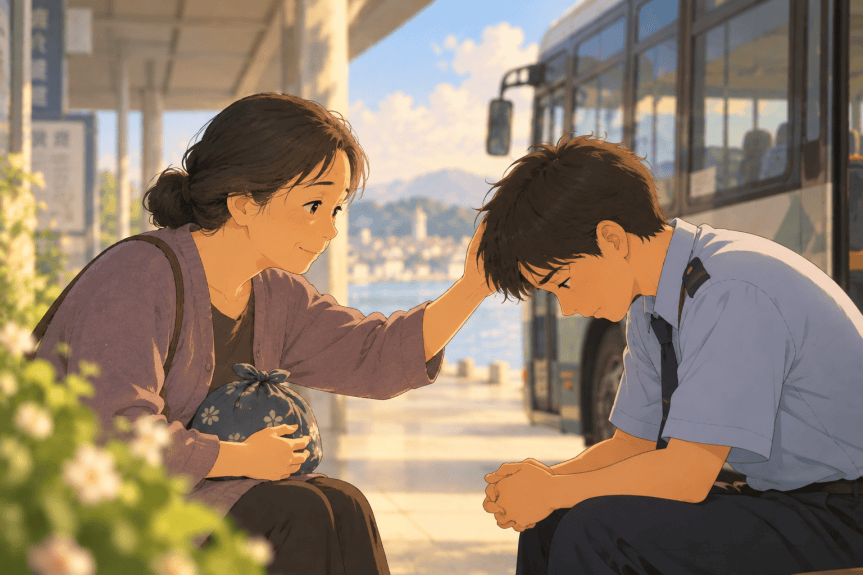
Finally, Luo Ying met with the executives of the public transportation company that employed Xiao Fu. The executives were fully prepared for a difficult confrontation.

To everyone’s surprise, Luo Ying made only two requests.

First, she asked that Xiao Fu not be punished or dismissed from his job.

Second, knowing that Xiao Fu frequently suffered from insomnia, she offered him a traditional home remedy that she hoped might help.

Before she left, the company’s executives offered her a substantial sum of compensation. However, she firmly refused to accept it.

Her actions left everyone in the company, from the executives to the employees, deeply astonished.

Because Luo Ying chose not to pursue the matter further, Xiao Fu was able to keep his job.

From then on, Xiao Fu and representatives of the public transportation company visited their benefactor every year. They not only continued to care for Luo Ying as she grew older but also contributed to the development of her village in whatever ways they could—investing in local projects, building roads, and constructing new school buildings.

One can hope that, through these efforts, more children will have the opportunity to follow in Han Xiang’s footsteps: attending university, leaving their village, and discovering the wider world.

Luo Ying’s kindness, generosity, and forgiving nature are truly admirable. Despite the unbearable pain of losing her only son in a traffic accident, she demonstrated extraordinary patience, tolerance, and empathy.

Such moral character is far beyond what most people can achieve and is certainly worthy of our admiration and emulation.

As H.H. Dorje Chang Buddha III teaches in Philosophical Sayings About Worldly Matters:

“To forgive is evidence of one’s virtue. Right or wrong, success or failure will eventually become apparent to the public, and those who trespassed against you will be ashamed of themselves.”

This means that those who are able to understand and forgive the mistakes and disputes of others demonstrate that their moral character has reached an acceptable standard and entered the realm of virtuous conduct.

This is because disputes over right and wrong are often difficult to unravel or explain completely. Whether something ultimately results in success or failure will eventually become clear; it is simply a matter of time.

Moreover, disputes over right and wrong, as well as success and failure, are ultimately without inherent reality.

Once we understand this principle, we should not become attached to disputes over right and wrong. The more we cling to them, the more deeply we become entangled. The stronger our attachment, the further we sink into conflict and controversy.

By not becoming attached to such disputes, we demonstrate that our moral character has reached a higher level of virtue.

When others witness such conduct, they will come to recognize, deep within their hearts, that we are truly people of noble character and virtue.

In particular, those who have wronged us and drawn us into disputes may experience the reproach of their own conscience. Inspired by our conduct, they may reflect upon their mistakes, repent, reform themselves, and ultimately contribute to the well-being of society.

Throughout life’s journey, we encounter all kinds of people and situations, both good and bad, amid endless complexities and disturbances.

If we can respond to those who insult, criticize, or harm us with a broad mind and a compassionate heart—seeking to understand them and even showing them care—then what room would remain for anger, hatred, or resentment?

Surely, the world would become a better, more peaceful, and more harmonious place.

Written by: Zai Lu Shang

Edited by: Putizi

link: https://myhappylifestyle.net/2026/10/26/dorjechangbuddhaiii-a-mothers-forgiveness-after-losing-her-only-child/

#DorjeChangBuddhaIII #Spirituality #Buddha #Buddhism
Say No to Mental Exhaustion: There Is No Standard Answer to Life

Say No to Mental Exhaustion: There Is No Standard Answer to Life

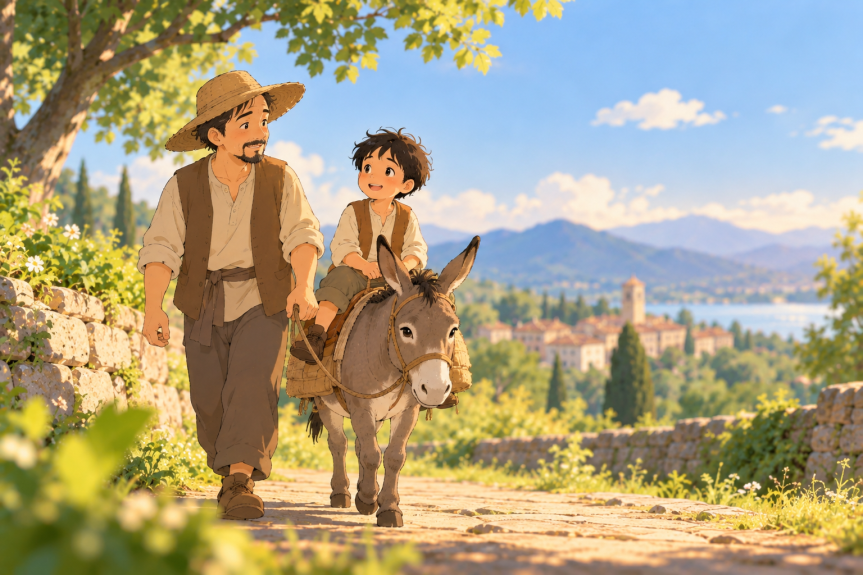
In Aesop’s Fables, there is a humorous and thought-provoking story called The Father, the Son, and the Donkey.

A father and his son were leading a donkey to the market to sell it. Along the way, a group of young girls saw them and laughed at their foolishness, saying that they had a donkey but did not even know enough to ride it.

Thinking that they had a point, the father let his son ride the donkey while he walked alongside it.

Before long, an elderly man passed by and lamented the decline of moral values. He criticized the son for being unfilial, allowing his father to walk while he rode the donkey. Hearing this, the father and son switched places, with the father riding and the son walking.

After traveling a little farther, they encountered a woman who mocked the father for being heartless, riding comfortably while making his son walk. The father quickly invited his son to ride with him.

However, after continuing for some distance, another passerby criticized them, saying that two people riding such a thin donkey would surely exhaust it to death.

Upon hearing this, the father and son immediately dismounted. They found some rope, tied the donkey’s four legs together, and carried it on a pole.

As they were crossing a bridge, the donkey struggled violently, fell into the river, and drowned. The father and son could do nothing but embrace each other and weep bitterly.

After reading this story, most people would instinctively criticize the father and son: How could they be so foolish? Why did they immediately change their actions whenever someone made a comment? They had no firm convictions of their own!

Yet, upon deeper reflection, the story reveals a profound lesson: No matter what choices you make, you can never satisfy everyone.

From the young girls’ perspective, the donkey should have been put to good use, and riding it was better than walking alongside it. From the elderly man’s perspective, a son should respect and care for his father, so the father should have priority. From the woman’s perspective, a father should care for his child, so the son should have priority. From the passerby’s perspective, the donkey should be treated with compassion, so its well-being should come first.

Were any of them wrong? From their respective perspectives, their opinions were not necessarily right or wrong.

The crucial question is: What did the father and son actually want?

Returning to their original intention, all they wanted was to take the donkey to the market, sell it, and earn some money.

However, by repeatedly listening to others and trying to please everyone, they abandoned their independent judgment and their original convictions. In the end, they lost everything.

If we behave like the father and son in this fable, constantly seeking others’ approval and repeatedly questioning our own decisions, everything we pursue may ultimately prove to be nothing more than an illusion, like flowers reflected in a mirror or the moon reflected in water.

In reality, we do not need to please everyone. We can make our own choices because there is no single standard answer to life.

Life does not follow a fixed path, either. Each of us is given a different script. Our opportunities are unequal, our choices differ, and our outcomes are not necessarily the same.

Those who are “born in Rome”—children from wealthy families—may enjoy privileged access to resources, graduate from prestigious overseas universities, and return home to start businesses.

Children of celebrities may have exceptional advantages and opportunities, with easier access to the spotlight and public recognition.

Gil Perez, a longtime doorman at Christie’s auction house, worked for 35 years welcoming and assisting visitors, eventually retiring with benefits reportedly comparable to those of a vice president and an annual income reaching one million.

Meanwhile, students from small towns who have spent more than a decade studying diligently may overcome the limitations of their backgrounds through perseverance and hard work, eventually finding their place at the forefront of a changing world.

Although we all begin life from different starting points, with some getting an early start and others beginning later, our starting point does not determine our destination. The effort and perseverance we demonstrate along the journey remain deeply inspiring.

Life is full of examinations, and every experience presents a question to be answered. None of the paths we have traveled are meaningless; every step counts. Whether we find ourselves in a valley or at the summit, each offers its own scenery. Whether we encounter storms or sunshine, every experience can become a source of enrichment.

True redemption lies in personal growth and the refinement of one’s character. We need not glorify suffering, but the resilience and determination developed through adversity are certainly worthy of admiration.

As H.H. Dorje Chang Buddha III teaches in Philosophical Sayings About Worldly Matters:

“A tree exposed to the fury of the elements will grow tall and strong. A tree kept indoors will be too weak to survive any harsh environment even when its top touches the ceiling. A life of ease and comfort produces only weaklings.”

This means that trees worthy of becoming great structural pillars are those that have undergone extensive trials and refinement. Standing beneath heaven, the sun, and the moon, they endure the harshness of wind, cold, heat, and moisture as they grow.

In remote mountains and wilderness, these trees withstand countless hardships, storms, and years of exposure to the elements. Through such prolonged trials, they eventually grow into tall, strong, and sturdy trees.

However, if a tree is planted indoors, no matter how much it grows—even if it reaches the roof—it remains tender and underdeveloped. Without sufficient sunlight, rain, and exposure to the natural elements, it lacks the necessary conditions for proper growth and strengthening. As a result, its wood remains soft and immature, unsuitable for practical use.

The same principle applies to human beings.

If a person merely studies behind closed doors, never experiences hardship, never undergoes various forms of training, and remains completely disconnected from society and practical life, that person will never truly understand the full range of life’s experiences—the bitterness, sourness, spiciness, sweetness, and saltiness of life.

Without such experiences, one cannot become a strong and capable individual. And without developing such strength and capability, one cannot become a truly outstanding and useful person.

Therefore, to become a person of genuine ability, one must undergo the kinds of trials described by the ancients: having one’s muscles and bones tested through hard work, experiencing hunger and physical hardship, enduring poverty and deprivation, and facing difficulties that challenge one’s actions and resolve.

None of these forms of training can simply be overlooked if one wishes to develop genuine ability. Only through diverse experiences, practical training, and personal refinement can a person ultimately become someone of true value and capability.

Written by: Yue Se

link: https://myhappylifestyle.net/2026/10/24/dorjechangbuddhaiii-say-no-to-mental-exhaustion-there-is-no-standard-answer-to-life/

#DorjeChangBuddhaIII #Spirituality #Buddha #Buddhism
The More Accomplished a Person Is, the More They Embrace “Deep-Well Thinking”

The More Accomplished a Person Is, the More They Embrace “Deep-Well Thinking”

Many people have heard of the “10,000-Hour Rule,” which suggests that to become an expert in a particular field, a person needs at least 10,000 hours of practice. In other words, if you work eight hours a day, five days a week, it will take at least five years to become an expert in a particular field. If you devote three hours a day to effective learning, accumulating more than 1,000 hours a year, you may become a highly skilled professional in that field after ten years.

Success does not come from grand declarations but from persistent, down-to-earth effort and unwavering perseverance. An indispensable part of this process is the self-discipline practiced day after day.

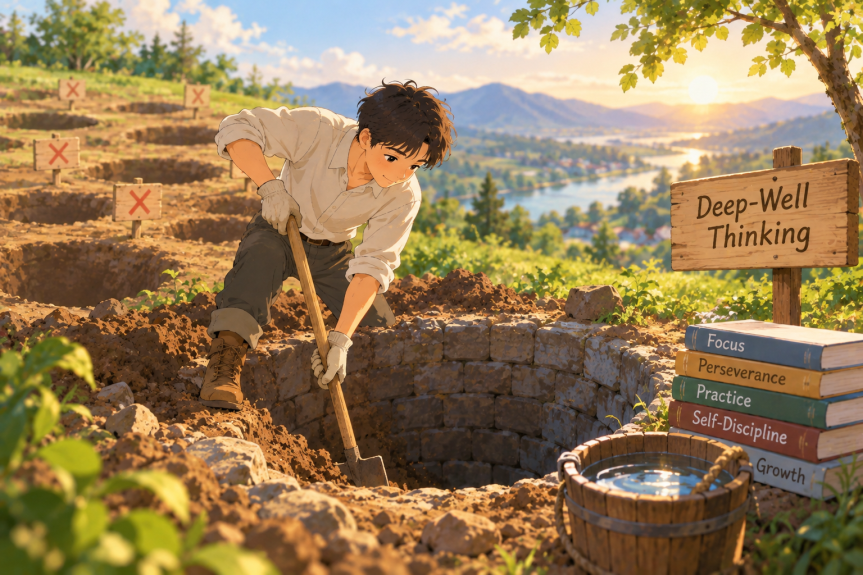
The renowned French thinker and writer Romain Rolland once said, “Rather than spending a great deal of time and energy digging many shallow wells, it is better to devote the same time and energy to digging one deep well.”

Learning to settle one’s mind, remain focused, and cultivate deep expertise in one’s chosen field is among the rarest and most valuable abilities a person can possess.

What Romain Rolland described is essentially “deep-well thinking.” Imagine digging a well in search of water. If you give up and move to another location every time you fail to find water, you may end up digging many shallow wells without ever reaching a water source. Would it not be better to concentrate your efforts on digging one well, persevering until you finally reach water?

After all, everyone’s time and energy are limited. If you want to achieve success in a particular area, you must commit yourself to that field, cultivate your expertise, and strive to become an expert. You should not constantly imagine that the grass is greener elsewhere, nor should you be halfhearted in your efforts or give up easily. Only by thoroughly understanding the essence of what we do can we develop genuine confidence, accumulate substantial knowledge and ability, and eventually achieve remarkable results.

Yet many people today are too restless and impatient. Whatever they attempt, they hesitate, worry excessively about what lies ahead, and constantly doubt themselves. They are unwilling to put in the necessary effort, and as a result, many things remain unfinished or unsuccessful. They confine themselves to a narrow world of their own making, accomplish little, and ultimately complain about the unfairness of society rather than reflecting upon their own shortcomings.

There is no such thing as a free lunch, nor is there any success that comes without effort. Every meaningful achievement must be earned through one’s own hard work and perseverance.

Zeng Guofan, a prominent figure of the late Qing Dynasty, taught his children that three qualities are essential to learning: first, aspiration; second, knowledge and insight; and third, perseverance.

We can apply this principle to our daily lives as well. Once we have established a clear goal, we should act with determination, remain firm in our convictions, and persevere in our efforts. We will then discover that accomplishing something well is not necessarily as difficult as we once imagined.

Namo H.H. Dorje Chang Buddha III imparted in Philosophical Sayings About Worldly Matters:

“No pains, no gains. Hard work never goes unrewarded for it always leads to gains. Pain is gain in disguise.”

This means that all happiness and blessings are obtained through diligent and arduous effort; they do not simply fall from the sky.

To accomplish anything worthwhile, we must strive for it with diligence. Such effort naturally involves fatigue and hardship, and we may even encounter setbacks, difficulties, and suffering along the way. However, as long as we do not retreat, but continue moving forward, overcoming obstacles and striving toward our goals, the hardship we endure will ultimately give rise to the happiness of accomplishment.

This is why the ancients said that blessings arise from hardship. After enduring difficulties, blessings naturally follow.

The phrase “This is perfectly clear” emphasizes that the law of cause and effect is never mistaken. Happiness must be earned through one’s own diligent labor and perseverance. There are absolutely no shortcuts. This is a truth that is perfectly clear and unmistakable.

Indeed, this is precisely what we observe in real life. The famous and accomplished people we see and hear about have all devoted tremendous effort and hard work behind the scenes before achieving success.

Take the American swimmer Michael Phelps, for example. In addition to his natural physical advantages, including his exceptionally long arms and legs, he reportedly trained for eight hours a day throughout the year, maintaining this demanding routine for five or six years. Through such extraordinary dedication, he achieved the remarkable feat of winning eight gold medals at the Beijing Olympic Games.

Similarly, Warren Buffett, widely known as the “Oracle of Omaha,” and Microsoft co-founder Bill Gates have devoted countless hours—far exceeding 10,000—to thinking, researching, and putting their knowledge into practice within their respective fields. Combined with their keen market insight and business judgment, these sustained efforts contributed to their extraordinary achievements.

When we understand the saying, “Ten years of sharpening a sword for the moment its brilliance is revealed,” we also come to appreciate the power of concentration, diligent learning, and continuous self-improvement.

As the ancient saying goes:

“Without accumulating small steps, one cannot travel a thousand miles; without gathering small streams, rivers and seas cannot be formed.”

Whatever we aspire to accomplish, as long as we follow the right path and pursue our goals with unwavering determination and persistent effort, we can trust that our time and dedication will not be wasted, and that our achievements will eventually come to fruition.

Written by: Zai Lu Shang
Edited by: Yuese

Link: https://myhappylifestyle.net/2026/10/20/dorjechangbuddhaiii-deep-well-thinking/

#DorjeChangBuddhaIII #Spirituality #Buddha #Buddhism
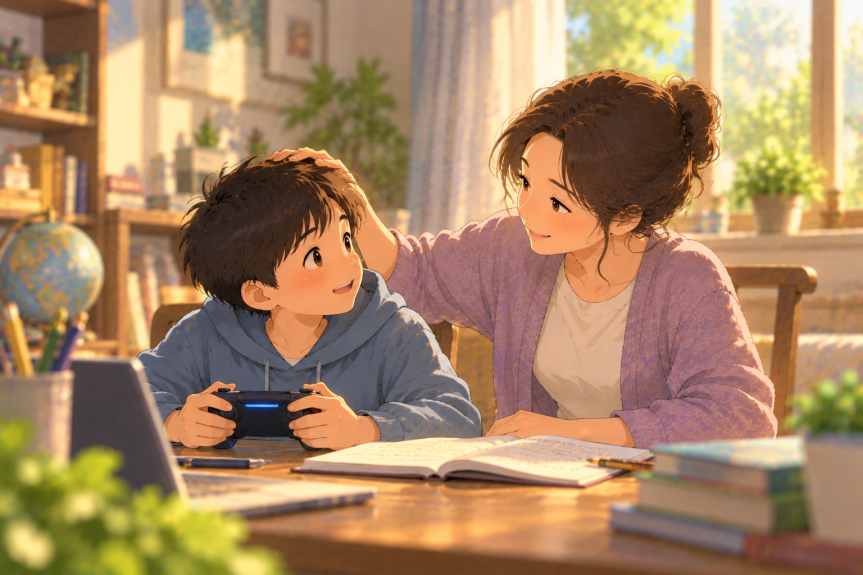
Did My Child’s Gaming Spark a “Family War”? The Experience That Reshaped My Approach to Parenting

Did My Child’s Gaming Spark a “Family War”? The Experience That Reshaped My Approach to Parenting

From time to time, we come across news stories online about mothers who become so stressed while helping their children with homework that they develop health problems, fathers who become so angry while tutoring their children that they suffer heart attacks, and parents whose efforts to supervise homework end up triggering a full-blown “family battle.”

Without exaggeration, I recently experienced a “family war” of my own. It truly brought to mind the saying: “When there’s no homework, mother and child are loving and harmonious; once homework begins, the whole household is thrown into chaos!”

Due to local COVID-19 prevention measures, the school notified students that classes would be conducted online from home. On the first day, my son followed his teacher’s instructions very well. By the second day, however, he had begun doing as he pleased. Before finishing his homework, he started playing video games and did not submit his assignment until 10 p.m.

When I saw the teacher’s message reminding him to turn in his homework, my anger immediately flared up. I raised my voice and scolded my son, “Why can’t you be more responsible? Do you know how much I trust you? Is this how you’re going to deal with your homework?!”

He immediately raised his voice in return and protested, “Why do you have to control everything? As long as I finish my homework that day, it should be fine!”

How dare he yell at me like that? It seemed utterly disrespectful! I was deeply hurt and extremely angry. In a moment of impulse, I slapped him and took away his phone. My son cried and made a scene, throwing the whole household into turmoil. When I tried to speak with him again, he slammed the door, locked it, and refused to let me come near him.

For a moment, I did not know what to do. Almost without realizing it, I went to the Buddhist altar, opened a Buddhist book, and began reading respectfully. I came across this teaching by Namo H.H. Dorje Chang Buddha III:

“When someone criticizes or slanders you, there must be some mistakes you have made in handling things inappropriately, or at least you have failed to win people’s approval and respect for what you did. What you must do in this case is to make full criticism of yourself.”

This means that whenever someone criticizes or slanders you, you should carefully reflect upon yourself and recognize that there must be something you have done wrong, because people do not accuse others entirely without cause.

In our interactions with others or when handling various matters, conflicts may inevitably arise for many different reasons. Perhaps something in our words or actions has offended or wronged the other person, or perhaps our attitude has made them feel that they have been treated unfairly. At the very least, we have failed to gain their recognition, respect, or admiration. In other words, we have failed to earn their goodwill toward us.

This alone shows that we are not yet perfect and that there are shortcomings on our part. Therefore, we should sincerely examine ourselves from within, recognize our own faults, and engage in more self-criticism and self-reflection.

The more I read, the more ashamed I felt, and gradually my mind became calm again. It was certainly wrong for my son to become absorbed in video games to the point that they interfered with his studies, but my own mistake was even greater. I should not have lost my temper, much less hit him. Violence cannot solve problems. I should treat my son as an equal and communicate with him more. Resorting to physical force would only intensify the conflict and make him even more rebellious.

How could my words and actions that day reflect those of a loving mother? How could they reflect the conduct of someone cultivating herself?

As I thought about this, I became deeply remorseful. At that moment, my entire approach to parenting was reshaped. I realized that I should not use parental authority to suppress my son. Instead, I needed to communicate with him on an equal footing.

Afterward, I changed my attitude and spoke with my son calmly. I took the initiative to apologize to him, acknowledged my mistake, and promised that I would no longer resort to violence. When problems arose, we would communicate with each other instead.

At the same time, we reached an agreement: he could use his phone, but only after completing his homework and provided that he had enough free time. He could play games for no more than half an hour a day. My son accepted these conditions.

At last, the conflict was resolved. Our “family war” came to an end, and we made peace with each other.

My son’s “rebelliousness” taught me a valuable lesson. It prompted me to reflect on myself and correct my attitude. It also led me to think more deeply: Life is filled with ups and downs, favorable and adverse circumstances. Greed, anger, ignorance, attachment, joy, sorrow, and all kinds of emotions accompany us along the way. What should we do so that we can withstand the tests and trials of life?

Look Inward Rather Than Seeking Outward

In the past, whenever conflicts arose between me and my family members, colleagues, or classmates, I habitually blamed others. I failed to recognize my own faults and always believed that I was right.

Yet when one finger points at another person, the other fingers point back at oneself.

Looking back, I realized how often I had complained. I had complained that my parents favored my brother and did not care enough about me. I had complained that my husband made reckless decisions and accumulated debts, leaving me constantly worried and anxious. I had complained that my son was playful and disobedient. I had complained that my family failed to appreciate everything I did for them.

But complaining, blaming, and becoming angry only make matters worse; they do not solve the actual problem. Ultimately, the better approach is to examine matters from the perspective of cause and effect, analyze the situation, uncover the root of the problem, and find a way to resolve it.

Strengthen Our Vows and Resolve to Fulfill Them

Afflictive hindrances are among the great obstacles we face. They arise from karmic forces rooted in beginningless ignorance. When the power of our vows arises, it can overcome the force of karma.

If we do not have the great vow and determination to attain liberation in this lifetime, do we really want to continue wandering through the six realms of reincarnation in our next life? We may never again encounter the wonderful Dharma conditions that we have in this lifetime.

Since we have already had the opportunity in this lifetime to hear the True Dharma and learn and practice Buddhism, we should follow the teachings and put them into practice, relinquish our attachments, and no longer allow ourselves to be swept away by the Eight Winds—gain and loss, defamation and praise, acclaim and ridicule, suffering and pleasure.

We must cultivate ourselves amid the circumstances we encounter, sincerely and steadfastly fulfill our vows, and resolve to bring them to completion. This serves as a compass guiding us forward.

The Family Is Our Training Ground

The path of cultivation is like a difficult journey, and I too am a traveler upon it.

Cultivation is reflected in every thought that arises in our minds, every movement we make, every word we speak, and every way in which we interact with people and handle matters. It is reflected in whether we have truly learned from the Buddha’s thoughts, speech, and conduct and whether we actually put what we have learned into practice in our daily lives.

The family is our training ground.

A happy family does not come from constantly thinking about how to change the other person. Rather, it comes from continually examining our own shortcomings, correcting them, improving ourselves, and becoming better people—while also bringing comfort and happiness to those around us.

I believe that a heart filled with gratitude and appreciation for the affinities we share will bring greater joy, ease, and peace to both ourselves and our families.

Written by: Haohe
Edited by: Sayi / Bodhizi

Link: https://myhappylifestyle.net/2026/10/14/dorjechangbuddhaiii-did-my-childs-gaming-spark-a-family-war/

#DorjeChangBuddhaIII #Spirituality #Buddha #Buddhism

A Testimony to the Truth and Reality of the Buddha Dharma

In September 2015, our Master, wishing to encourage his disciples to respectfully listen to the Dharma discourses of H.H. Dorje Chang Buddha III, establish right understanding and right views, and diligently cultivate themselves so that they might attain accomplishment and liberation at an early date, organized a program called “The Practice of Right Understanding and Right Views.” Participants were required to listen to one Dharma discourse each day for a period of six months. We immediately signed up for the program and also encouraged other Dharma brothers and sisters to participate so that we could support and remind one another to remain diligent in our practice.

On the evening of Friday, September 11, I took my “Dharma-Listening Record Sheet” and went to the home of Dharma Sister Huimin. As I approached the covered walkway in front of her home, I accidentally missed a step and fell. My right knee was injured and bleeding, and I also strained my lower back. Xiangjun’s mother, who was there at the time, immediately helped me up. That evening, I did not feel much physical discomfort. However, the following morning, the pain in my lower back was so severe that I could hardly get up.

After washing up, I was unable to sit on the sofa as I normally did to listen to the Dharma. Instead, I had to sit on the floor and lean against the sofa. After respectfully listening to two Dharma discourses, however, the pain in my lower back unexpectedly disappeared. I was able to stand up naturally, and the wound on my knee had almost vanished as well.

That afternoon, Xiangjun’s mother came to visit me. When she saw my condition, she was amazed and exclaimed, “This is incredible! Then I want to come and listen to the Dharma too.”

I had originally been worried that I would not be able to travel to the Buddhist center in Tainan on Sunday as scheduled to receive a Dharma transmission from my Master. I am deeply grateful for the blessings and protection of H.H. Dorje Chang Buddha III, all Buddhas, Bodhisattvas, and Mahasattvas of the ten directions, and my Master.

Every day, when we listened to the Dharma at seven o’clock in the morning and again in the afternoon, two spotted doves would fly to our balcony and remain there quietly, listening together with us to the Dharma discourses of H.H. Dorje Chang Buddha III. They neither made noise nor caused any disturbance. After the Dharma discourse ended, we would feed them, and over time they became unafraid of people.

Every Tuesday at 3:00 p.m., a number of diligent Dharma brothers and sisters would come regularly to the Jili Dharma-Listening Center, regardless of wind or rain, to respectfully listen to the Dharma discourses. We would also share with one another our experiences, insights, and reflections gained through cultivating ourselves and learning Buddhism.

The Dharma brothers and sisters understood that cultivating bodhi merit includes diligently introducing people to the Dharma and helping guide them to listen to the Dharma, cultivate themselves, and learn Buddhism. Their children, relatives, and friends noticed that after they began listening to the Dharma and cultivating themselves, they had learned to practice patience and forbearance, their complexions had improved, and they had also become healthier. As a result, new people gradually began joining us in listening to the Dharma, cultivating themselves, and learning Buddhism.

Seeing the joy that came from the transformation and growth of these Dharma brothers and sisters made me realize that I should work even harder to sow the seeds of bodhi far and wide, so that more relatives and friends may have the opportunity to hear and learn the true Buddha Dharma.

I feel profoundly fortunate in this lifetime to have the opportunity to hear the magnificent Buddha Dharma of Namo H.H. Dorje Chang Buddha III and to follow my Master in cultivating myself and learning Buddhism. This has made my life fuller, richer, and more meaningful.

Buddhist Disciple Liyu
With palms joined in reverence

Link: https://myhappylifestyle.net/2026/10/12/dorjechangbuddhaiii-a-testimony-to-the-truth-and-reality-of-the-buddha-dharma/

#DorjeChangBuddhaIII #Spirituality #Buddha #Buddhism
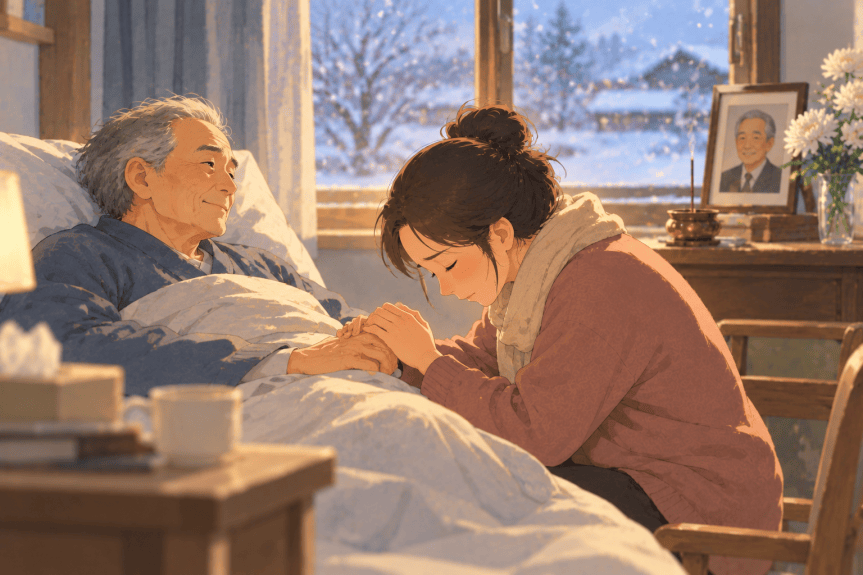
COVID-19 Became the Final Blow That Took My Father Away

COVID-19 struck with devastating force and became the final blow to my father, who was
already suffering from lung cancer. That winter felt especially bleak and desolate. Snow
was falling, yet even the snowflakes did not feel as cold as my heart.

My father was the person I respected most in my life. He was the “backbone” of our family.
Born in a rural village in northeastern China, my father was not only the pride of my
grandparents but also the pride of the entire village. In those difficult times, for a boy from a
poor rural family to be admitted to a prestigious university was almost like becoming the
top scholar in the ancient imperial examinations—a promising young man had risen from
humble beginnings.

Yet my father had a very difficult childhood. He lost his mother at a young age when my
grandmother passed away. My grandfather had to be both father and mother, raising all six
children on his own.

Through perseverance and hard work, my father was able to leave the countryside behind.
He graduated from university with outstanding grades and was assigned to work in Tianjin.
In a city where he had no relatives or connections, he gradually established himself.
Through years of tireless effort, he achieved extraordinary results in an ordinary position
and eventually built a successful career.

Time passes so quickly, often catching us completely unprepared.

One day in July 2022, I noticed that my father, who had always been in good health, was
making a wheezing sound when he breathed. After medical examinations, he was
diagnosed with lung cancer.

We were utterly shocked.

We sought medical advice and treatment from various doctors and hospitals. In the end,
however, we had no choice but to opt for conservative treatment because the location of
his tumor made surgery unsuitable.

Tormented by the illness, my elderly father grew thinner by the day. Whenever I saw him
coughing so severely that he could barely catch his breath, I wished desperately that I
could bear his suffering for him. I would rather have been the one who was ill.

Yet no matter how deeply I loved my father, there was nothing I could do to take his
suffering away.

How small and powerless human beings can be in the face of illness!

Then, as if things were not already difficult enough, my father contracted COVID-19. His
already frail body suffered yet another devastating blow.

On December 25, 2022, while many people were celebrating Christmas, my father left us
forever.

I held my elderly mother in my arms and dared not shed tears, afraid that seeing my grief
would deepen her sorrow.

After comforting my mother, I softly recited the Kṣitigarbha Sutra beside my father, praying
that he would receive the blessings of the Buddhas and Bodhisattvas and be reborn in one
of the three higher realms or in a Pure Land.

According to local customs in Tianjin, the deceased may be transferred to a mourning hall,
where the family holds memorial rites. Traditionally, the body remains there for three days
so that relatives and friends can come and pay their respects.

After receiving the many relatives and friends who came to mourn my father, I remained
alone in the mourning hall.

Standing before my father’s portrait, I could no longer hold back my tears. I simply let them
flow.

One by one, I told my father all the things I had wanted to say to him over the years but
never had the chance to express.

Perhaps it was only my imagination, or perhaps it was because I missed him so deeply, but
I almost felt that he was right there in front of me, listening as I spoke.

Lament — A Regulated Verse

The desolate winter wind chills me to the bone;
Across the mournful sky, wild geese cry in sorrow.
Weary in both spirit and form of this cold mortal world,
The body now belongs beneath the pure white snow.

A loving father’s warmth has faded like a dream;
Could a child’s devotion ever be in doubt?
A lone chrysanthemum stands by the fence, as though on a distant riverbank.
I gaze sorrowfully into the hazy distance as a thin mist drifts in.

This poem could express only a fraction of the grief within my heart.
No matter how reluctant I was to let him go, my father’s body was eventually reduced to a
bag of ashes and placed inside a small urn.

I could not even be certain whether those ashes truly belonged to the physical body that
had once been my father. But in fact, whether they did or did not no longer mattered. The
body was merely a temporary combination of the four great elements. The “soul” of the
father I had known had already gone somewhere beyond my knowledge.

At that moment, I could not help recalling an impartation from Namo H.H. Dorje Chang
Buddha III
in Philosophical Sayings About Worldly Matters:
“A person grows wiser by learning from the setbacks he suffered. True knowledge
comes from one’s own experience. Secondhand experience is worth little.”

On the journey of life, how can we truly understand the truth of something or gain genuine
insight into our own state of being?

The essential point is that understanding cannot come merely from what we hear, nor
merely from what we see. Beyond seeing and hearing, we must learn to draw experience
and lessons from repeated setbacks and failures. Through practical experience,
verification, and sincere reflection upon our failures, we can gradually develop an inward
understanding of things and come to comprehend the truth.

Therefore, we must personally undergo experiences before we can truly understand them.

If we merely rely on hearsay without personally putting things into practice, what we gain is
not an understanding of their true nature. Only the experience gained through what we have
personally undergone, witnessed, and practiced can lead us to genuine understanding and
truth.

“Life is impermanent” was something I used to say often.

One day, I would talk with someone about how quickly time passes; the next day, I would
speak with someone else about how everything can change in an instant.

But in reality, I had never truly developed a deep awareness of impermanence.
It was not until my father passed away that I was finally awakened to it.
My father had truly given me a profound and painful lesson in impermanence.


Written by: Zai Lu Shang
Edited by: Yuese

Link: https://myhappylifestyle.net/2026/10/11/dorjechangbuddhaiii-covid-19-become-the-final-blow-that-took-my-father-away/

#DorjeChangBuddhaIII #Spirituality #Buddha #Buddhism
My Personal Experience: The High Price of Saving Face

My Personal Experience: The High Price of Saving Face

From ancient times to the present, many people have placed great importance on “saving face,” often associating it with reputation and social status. Outwardly, they want to maintain a favorable image in the eyes of others; inwardly, they want to satisfy their own vanity. So, if someone causes them to “lose face,” serious trouble may follow.

Think about it carefully. It can be something as minor as a group of people scrambling to pay the bill at a restaurant, or something as serious as a tragedy caused by someone desperately trying to protect a fragile sense of pride. So many conflicts arise simply because people care too much about “face.”

When I was a child, I too once paid a price for wanting to save face.

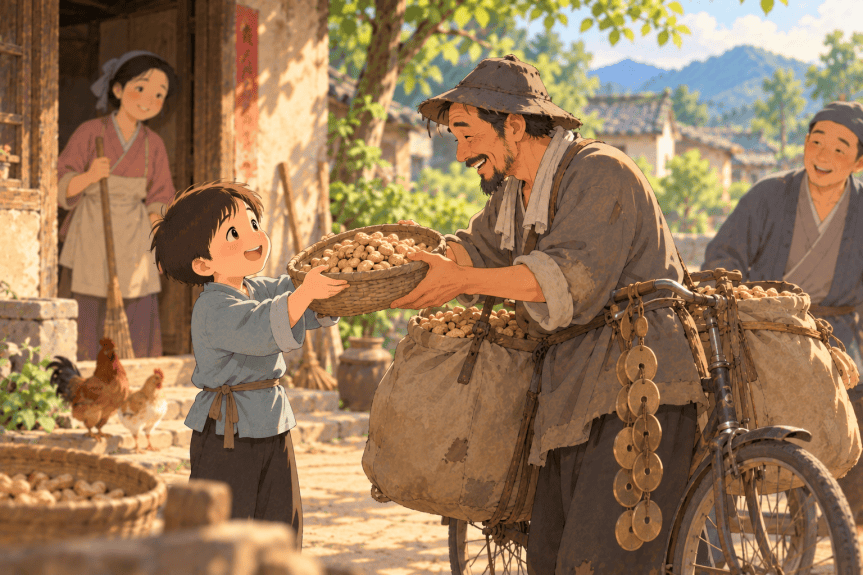
In the 1970s, everyday necessities were relatively scarce. Toothpaste tubes were made of aluminum, and itinerant peddlers often traveled from village to village collecting used tubes. Every so often, someone would also come to the village to castrate roosters and collect empty toothpaste tubes and the inner linings of chicken gizzards, known in traditional Chinese medicine as Ji Nei Jin.

Not many people did this kind of work. They traveled either on foot or by bicycle, carrying a long string of copper pieces fastened together somewhat like traditional Chinese clappers. As they walked, the copper pieces swung and struck against one another. Their distinctive clattering could be heard from far away, inevitably setting the chickens squawking and dogs barking in the otherwise quiet village.

One day, one of these peddlers became thirsty and stopped by our house for some water. After greeting him, my mother went to work at the threshing ground beside our house.

The man kept talking to me, trying to win me over. “What a good child!” “What a clever little one!” Compliments cost him nothing, and they came pouring out one after another. Before long, I was completely carried away by his flattery.

He asked me to bring him some peanuts to taste, and I obediently did as he asked. I brought him a large scoop filled to the brim with peanuts.

He showed no hesitation whatsoever. He dumped all the peanuts straight into the two large bags hanging from either side of his old-fashioned bicycle—and even remarked that it was not very much.

Just then, a fellow villager happened to pass by.

The peddler deliberately raised his voice and said, “What a hospitable child—so very generous!”

The villager gave me an amused smile and replied, “Yes, very generous indeed!”

At that moment, I actually felt terrible. After all, this was a time when food and clothing were scarce. Yet once I had been praised as an “especially generous child,” my concern for saving face made it difficult for me to stop. I had already given away a large scoop of peanuts, and the man still thought it was too little.

Gritting my teeth, I went and found a large bag and filled it to the top with peanuts for him.

Once again, he deliberately said in a loud voice, “You don’t need to give me so much! What a generous and sensible child you are!”

He then filled the two large bags on his bicycle with the peanuts and rode off without looking back.

Later, when my mother found out what had happened, she said to me, “Our family wasn’t doing business with him. It would have been enough to offer him a little something out of courtesy. Giving him such a large bag was far too much—that was enough to serve his whole family! Well, let’s just consider this your first time playing host and entertaining a guest.”

Although my mother did not criticize me, I knew very well how hard my parents labored in the fields to put food on our table. I deeply regretted what I had done. Our own family often did not have enough to eat, so how could I have given away our food so easily?

That incident taught me an important lesson: It can be very difficult to resist when someone showers you with flattering praise.

As I gained more life experience, I came to realize that sometimes people defend their pride and “face” even at the cost of their lives.

Take Xiang Yu, for example. After suffering defeat in the Chu-Han Contention, he fled to the Wu River. The chief of Wu River Pavilion told him, “Although the region east of the Yangtze is small, it spans a thousand li and has hundreds of thousands of people. It is still enough territory for you to rule as king.”

Xiang Yu laughed and said, “Heaven intends to destroy me. What would be the point of crossing the river?”

He would rather take his own life than continue living in defeat. What a tragic and lamentable end!

In fact, when Xiang Yu felt that he had “no face to see the elders of Jiangdong again,” concern for his pride and reputation was still at work deep within him. Had he been able to put aside the issue of saving face, cross the river, and regroup his forces, history might conceivably have unfolded differently.

Another example was a 2021 case in which a man killed his wife following an argument that began over an onion.

A man surnamed Li was drinking at home with several friends. After they had been drinking for some time and were in high spirits, one of his friends suddenly wanted some onion as a palate cleanser. Li called for his wife, Su, to cut some onion for them.

But Su was busy caring for their three young children and already had more than she could handle. Her husband not only failed to appreciate how overwhelmed she was, but also ordered her around. Already unhappy about his drinking, she replied in frustration, “If you want it, cut it yourself. If you don’t want to do that, then forget it. I’m not here to wait on all of you!”

That single remark, spoken with resentment and frustration, turned what had been a small gathering into a scene of violence.

After being refused by his wife, Li felt that he had lost face in front of his friends and that his authority as the “head of the household” had been undermined. He began arguing fiercely with Su. Under the influence of alcohol, Li picked up a sharp kitchen knife and stabbed his wife.

Su collapsed and lost consciousness. She later died from severe blood loss and damage to her internal organs. Li was subsequently sentenced to life imprisonment.

Just like that, a once-intact family was shattered.

Li’s attachment to saving face cost his wife her precious life and sent him into the depths of imprisonment. Trying to save face for a moment can result in a lifetime of regret.

This also serves as a warning to us: Why cling to something as hollow as “face”? Face itself is worth nothing.

Put another way, protecting one’s “face” is really a way of protecting one’s attachment to self. When everything revolves around “me,” human weaknesses such as selfishness, greed, anger, and ignorance can flourish, leading to one problem after another.

If a person truly wishes to earn dignity and respect, that person should strive diligently to accomplish something worthwhile and then share the benefits, care, and warmth with others, working for the well-being of the public. In this way, people will naturally respect that person from their hearts.

As Namo H.H. Dorje Chang Buddha III imparted in Philosophical Sayings About Worldly Matters :

“What makes the sun the greatest thing man has ever known? It is admired for providing light and warmth for all the beings under it. A truly great person is one who is willing to sacrifice his own benefit for the well-being of others.”

Why is the inherent nature of the sun considered great? It is because the sun consumes itself to bring light, warmth, and energy to the world. It enables plants to grow and humans and animals to survive, providing the conditions that sustain life in our world. In other words, the sun bestows benefits upon all things in the world. That is why everyone praises its greatness.

By the same principle, if we are free from selfish motives, quietly devote ourselves to others, and even make personal sacrifices to serve the interests of the public and bring benefits to others, people will naturally respect us and praise what we have accomplished. In doing so, we ourselves become great.

But if we merely put on appearances and do things for show—whether to impress ourselves or others—without genuine kindness and compassion arising from within, then ultimately it will all be nothing more than flowers reflected in a mirror and the moon reflected on water: beautiful illusions without substance.

Written by: Mingxun
Edited by: Yuese

Link: https://myhappylifestyle.net/2026/10/04/my-personal-experience-the-high-price-of-saving-face/

#DorjeChangBuddhaIII #Spirituality #Buddha #Buddhism