
In Buddhist Cultivation, Never Overlook the “Drizzle” and the Butterfly Effect
(1) A Drizzle Can Soak You Before You Realize It
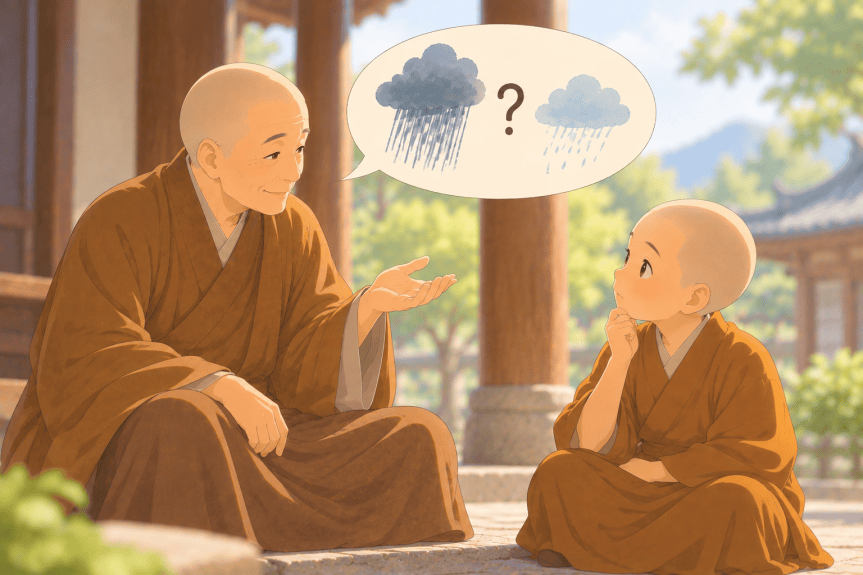
There was once a young monk cultivating himself at a Buddhist temple. He tended to pay little attention to small details, believing that minor matters were insignificant.
One day, his master asked him, “Which is more likely to get you soaked—a heavy downpour or a light drizzle?”
The disciple replied without hesitation, “Master, of course a heavy downpour is more likely to soak you.”
“But in everyday life,” the master said, “people are often more likely to have their clothes soaked by a drizzle than by a downpour.”
The disciple was puzzled. “A downpour brings much more rain, while a drizzle brings very little. How could a drizzle be more likely to soak our clothes?”

The master explained:
“When a heavy rain suddenly begins, people immediately become alert. Those carrying umbrellas quickly open them, while those without umbrellas hurry beneath the eaves to take shelter.
“But when there is only a light drizzle, people may hardly notice it. Even if they do, they often think nothing of it, believing that such a small amount of rain could never soak their clothes. So they continue walking through the rain as usual. Before they realize it, their clothes are completely wet.”

The master continued:
“Cultivating ourselves and learning Buddhism is much the same. As practitioners, everything in our conduct matters—our words and actions, every gesture and movement, every facial expression, every sentence we speak, and even every thought that arises.
“These things are like a fine drizzle. They may appear insignificant, but if we fail to pay attention and remain vigilant, we may intentionally or unintentionally hurt others or cause them distress and concern. In doing so, we may accumulate negative karma without even realizing it, ultimately preventing ourselves from attaining accomplishment and liberation.”
The disciple finally understood.
The “drizzle” represents our habitual tendencies and the seemingly minor details of our cultivation. Because they appear so small, we often fail to notice them. Yet if we continually neglect them, they can undermine our cultivation, leaving our efforts fruitless and even causing us to accumulate negative karma without realizing it.
(2) The Butterfly Effect
An apparently insignificant action can sometimes trigger a chain of far-reaching consequences. This is commonly known as the “butterfly effect.”
For nearly a century, from 1908 to 2003, British cyclists had won only one Olympic gold medal and had never won the Tour de France. Their results had been so disappointing that even bicycle manufacturers were unwilling to sell bicycles to the British team.

Then, in 2003, the team brought in a new coach.
The new coach asked the athletes to seek a 1% improvement in every aspect of their training.
Some might wonder: What difference could just 1% possibly make?

Yet these seemingly tiny improvements eventually helped transform British cycling.
At the 2008 Beijing Olympic Games, British cyclists delivered an extraordinary performance in track and road cycling, winning 60 percent of the available gold medals. During the ten years from 2007 through 2017, British cyclists won 178 world championships, 66 Olympic or Paralympic gold medals, and five Tour de France victories. These achievements came to be widely regarded as one of the most remarkable periods of success in cycling history.

The same principle can be applied to our daily cultivation.
If every day we could correct our habitual tendencies and undesirable habits by just 1%, while increasing our sincerity and devotion toward Buddhas and Bodhisattvas and strengthening our compassion for living beings by 1%, then each day we would be making progress along the path toward liberation. Our learning and cultivation would inevitably bring genuine benefit.
Unfortunately, just as we tend to overlook a light drizzle, we often overlook this seemingly insignificant 1% of diligent effort and improvement.
(3) Great Virtue Is Accomplished Through the Accumulation of Small Virtues
A great wind begins with the faintest stirring of the grass; mighty waves arise from tiny ripples.
As another ancient saying warns:
“A thousand-mile dike can collapse because of an ant hole.”
There is also an ancient Chinese teaching:
“Do not commit an evil deed simply because it seems small, and do not refrain from doing a good deed simply because it seems insignificant.”
In Buddhism, there is a vow:
“I vow to eliminate all evil, leaving no evil uneliminated; I vow to cultivate all goodness, leaving no good uncultivated; I vow to liberate all living beings, leaving no living being unliberated.”
If we do not put an end to small wrongdoings and do not accumulate small acts of goodness, how can we ultimately attain the realization of the holy ones?
Many eminent Buddhist practitioners of the past have set examples for us through the meticulous attention they paid to seemingly minor aspects of their cultivation.
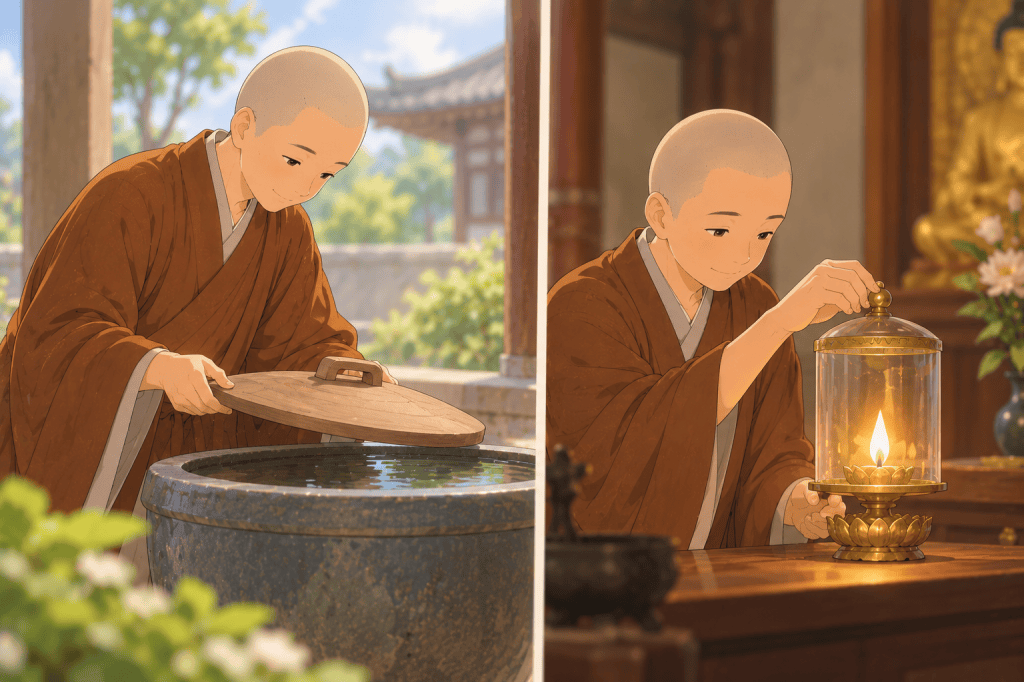
Master Yinguang was exceptionally attentive to details in his daily practice. When he lived at Fayu Temple on Mount Putuo, the basin he used for washing had a cover to prevent mosquitoes and other tiny insects from falling into the water and drowning. The oil lamp before the Buddha also had a protective cover so that moths would not fly into the flame and be burned to death.
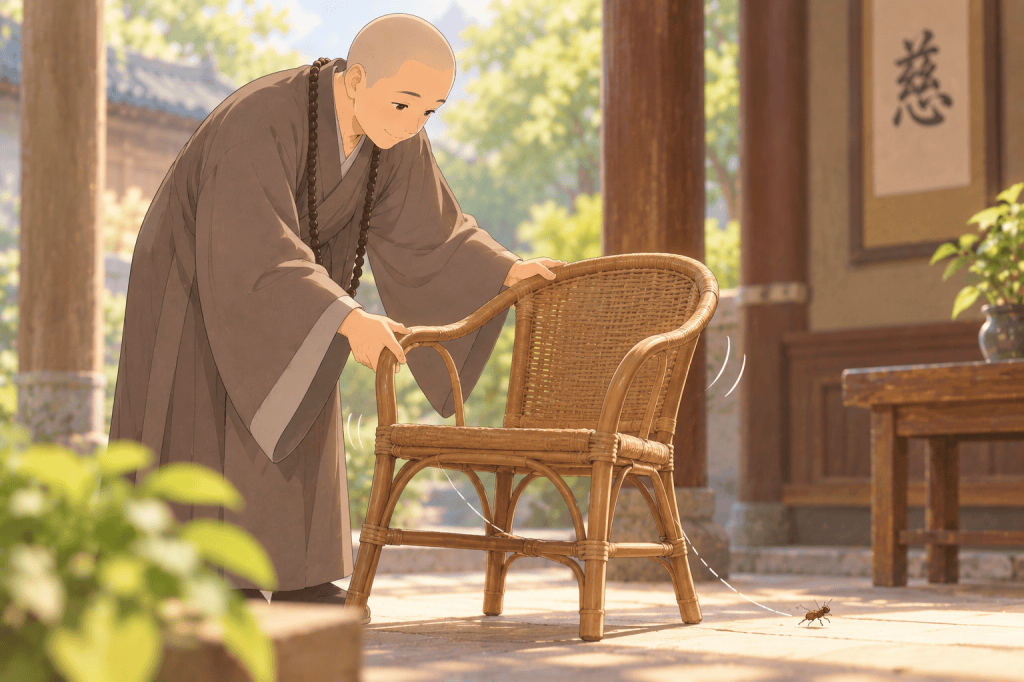
Before Master Hongyi sat down on a rattan chair, he would gently shake the chair from side to side several times. He did this to avoid harming tiny insects that might be hiding in the crevices of the chair. By moving the chair first, he was, in effect, giving these small creatures a warning and allowing them time to move away to safety.
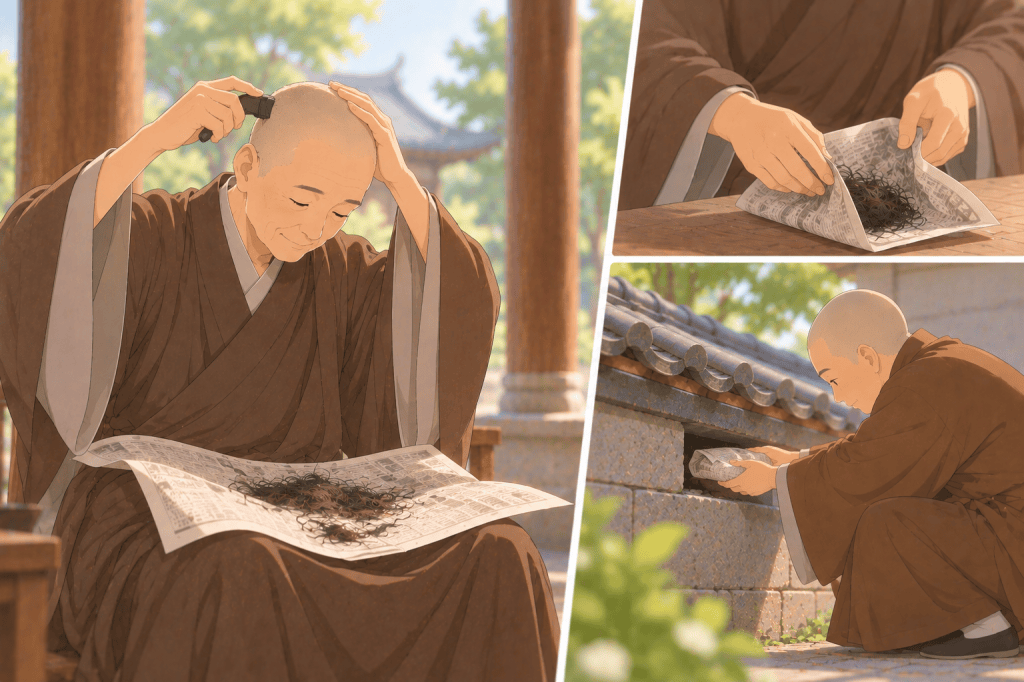
When Master Nenghai was at the Vajra Bodhimanda in Shanghai, his student, Master Dao’an, recalled that whenever Master Nenghai had his head shaved, he would not allow the cut hair to fall onto the ground. Instead, all the hair had to fall onto newspapers spread across his lap.
Afterward, the hair would be carefully wrapped in the newspaper and placed beneath roof tiles or into crevices in a wall. He did this simply to prevent strands of hair lying on the ground from injuring tiny insects.
Cultivation must begin with the smallest details.
As the saying goes:
“If one is careless about minor conduct, it will eventually impair one’s great virtue.”
This accords with one of the teachings imparted by Namo H.H. Dorje Chang Buddha III in Philosophical Sayings for Worldly Matters:
“Moral excellence is the total addition of small good deeds. Great roads are built when grains of sand are put together. To a person aspiring to become virtuous, nothing that helps is too trivial to claim his attention.”
True cultivation is reflected not only in great vows or major actions, but also in the smallest details of everyday life. A thought, a word, a facial expression, or a seemingly insignificant action may appear no more consequential than a drop of drizzle. Yet when such small causes accumulate, their effects can become profound.
Likewise, every small act of kindness, every habitual tendency we correct, and every increase in compassion may seem insignificant at the moment. But accumulated day after day, these small improvements can gradually transform our conduct and our cultivation.
Great virtue does not arise all at once. It is accomplished through the accumulation of small virtues.
Written by: Zai Lushang
#DorjeChangBuddhaIII #Spirituality #Buddha #Buddhism

